

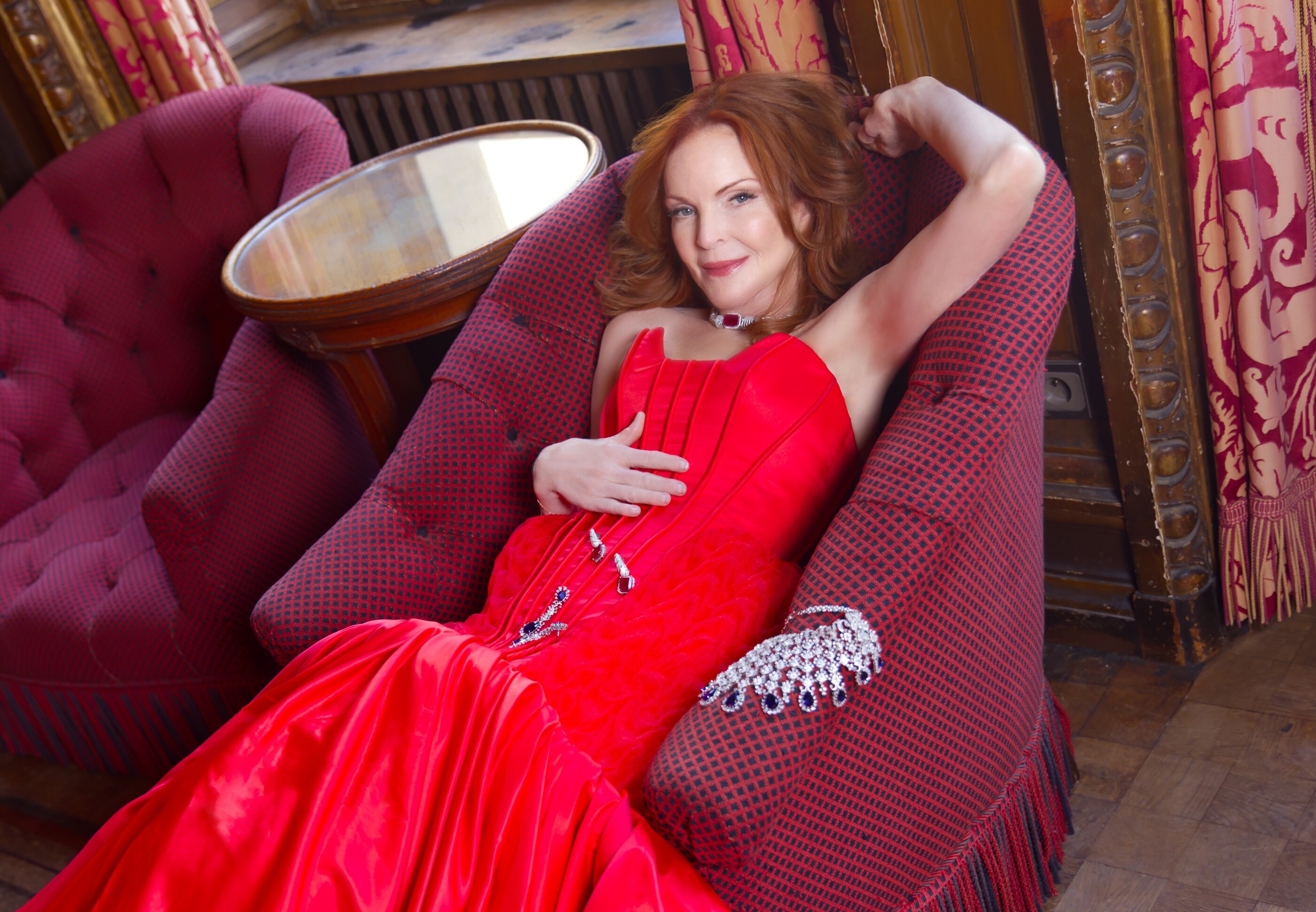
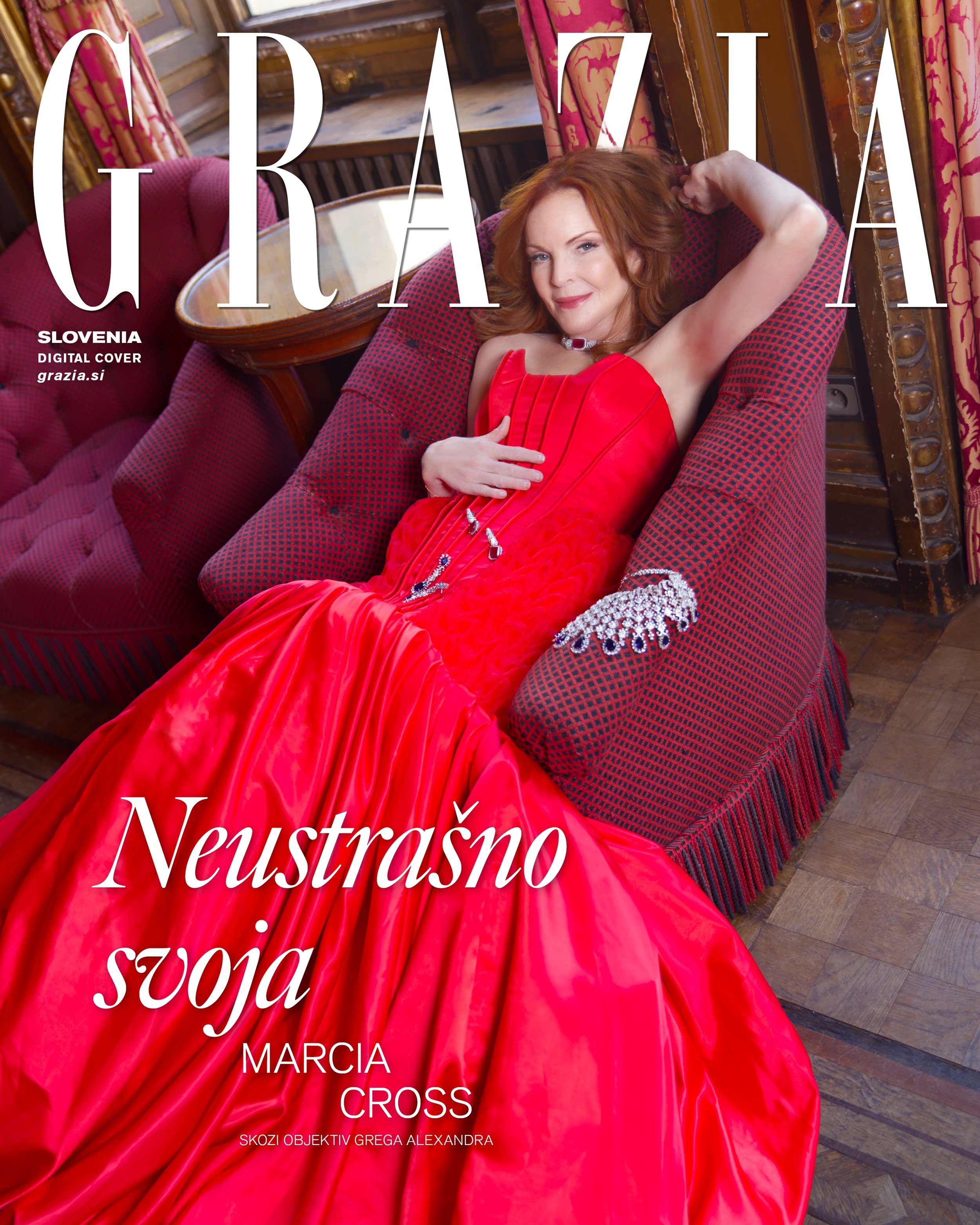
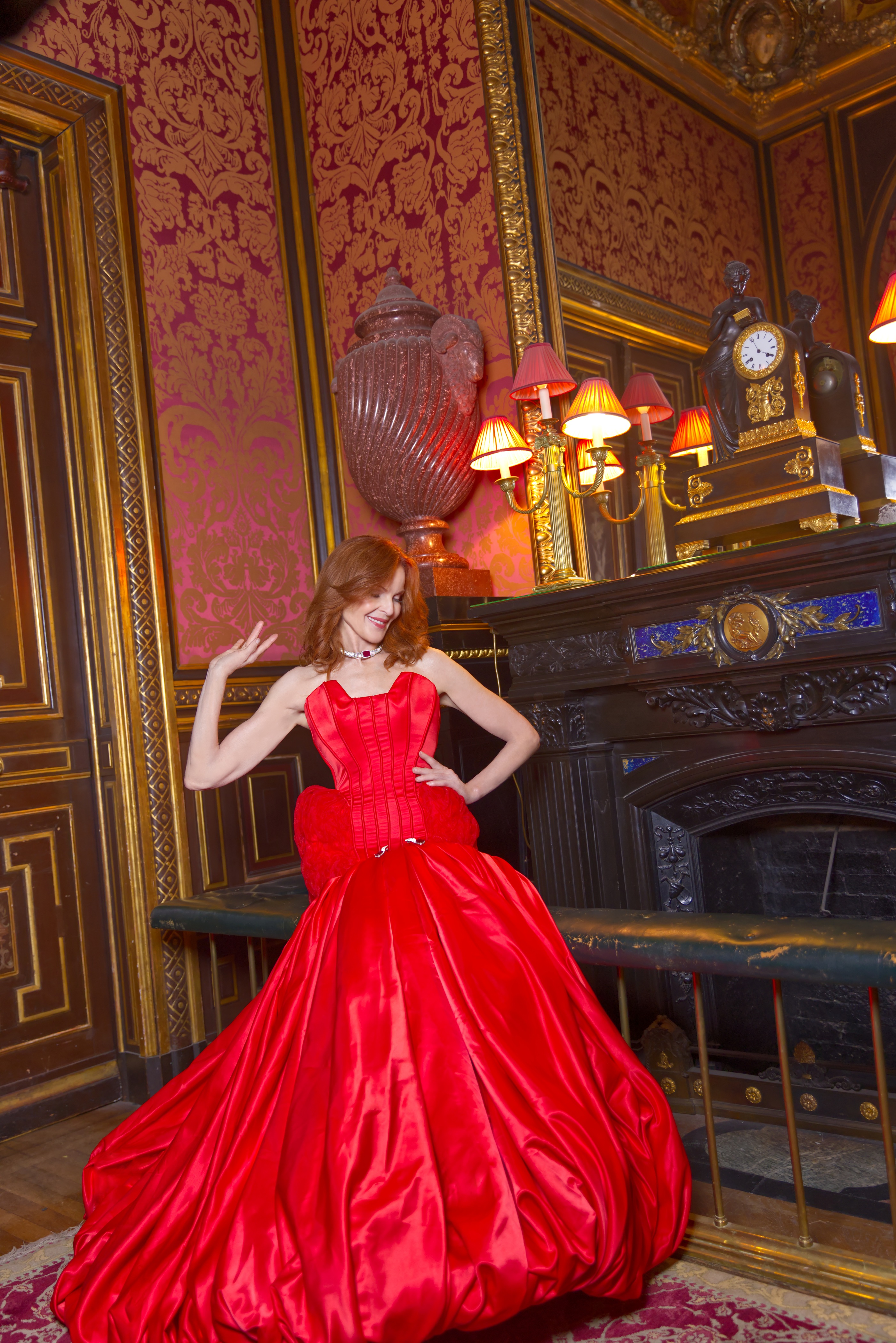
Za ekskluzivni intervju je Marcia Cross stopila v izjemen svet legendarnega pariškega Hôtel de la Païva, ene najbolj razkošnih in skrivnostnih zasebnih palač v mestu. Pred objektivom fotografa Grega Alexandra je igralka zaživela v zgodbi visoke mode, kjer se hollywoodski blišč sreča z veličino Pariza 19. stoletja. Marcia Cross je igralka, katere prezenca je zaznamovala nekatere najbolj nepozabne televizijske like. Tokrat razkriva bolj intimno plat sebe ter razmišlja o karieri, minevanju časa, novih začetkih in ženski, ki se skriva za ikono. V pogovoru z glavno urednico GRAZIE, Špelo Štamol, Marcia Cross spregovori z inteligenco, iskrenostjo in prefinjeno eleganco, ki jo spremljajo skozi izjemno kariero.
Govorili ste že o tem, da ste se odločili za avtentičnost namesto popolnosti. Kako so se skozi leta spremenile vaše predstave o uspehu, lepoti in sreči? Kdaj se danes počutite najbolj kot vi?
Ne morem reči, da sem se zavestno odločila za avtentičnost namesto popolnosti. To je zame preprosto nekaj samoumevnega, saj vem, da popolnosti niti približno ne morem doseči. (Bog ve, da sem se leta trudila.) In zdaj mi je to – končno – večino časa povsem v redu. Zaradi tega imam tudi veliko več notranjega miru.
Najbolj domače se počutim, ko sem na snemanju ali na odru – ko igram, režiram ali poučujem. Tam imam globino razumevanja, instinkt in jasnost, ki jih na drugih področjih svojega življenja nimam. To se mi zdi fascinantno. Mislim, da to ni nič nenavadnega, vendar me zelo zanima, kje človek postane najbolj močna, intuitivna in avtentična različica sebe.
Bree Van de Kamp je še vedno ena najbolj nepozabnih žensk televizije. Ko pogledate nazaj, kaj menite, da je v resnici skrivala pod svojo popolno zunanjostjo – in zakaj menite, da se je z njo povezalo toliko žensk?
Mislim, da so se ljudje z Bree povezali iz različnih razlogov. Perfekcionisti so se v njej prepoznali in se počutili opažene. Ženske, ki so se obupano trudile ustvariti vtis, da imajo vse pod nadzorom, so se lahko poistovetile z njo. Ženske, ki so skrivale svoje skrivnosti in ranljivost, so jo razumele. Prav tako ljudje, ki so se spopadali z alkoholizmom, in tisti z obsesivno-kompulzivnimi motnjami, saj je bilo pri Bree očitno prisotnega precej tega.
In vsakdo, ki se je v svetu počutil spregledanega, obsojanega ali nesprejetega takšnega, kot je, je vedel, da bi ga Bree ljubila ne glede na vse.
Vse to je delovalo tako prepričljivo tudi zato, ker čutim ogromno empatije in ljubezni do našega človeškega boja in dejstva, da se vsi trudimo po svojih najboljših močeh.
Toda Bree ni verjela, da je vredna ljubezni, če ne more doseči popolnosti …
Veliko se govori o tem, da Hollywood postaja vse bolj vključujoč. Toda, ali se je življenje igralk, starejših od petdeset let, zares spremenilo? Kje še vedno vidite največje izzive?
O Hollywoodu danes ne razmišljam več tako, kot sem nekoč. Dvakrat so mi povedali, da sem preveč ikonična, da bi lahko igrala druge vloge – in to za daljša obdobja. Povedali so mi tudi, da moram ljudem, ki odločajo, dokazati, da sem sposobna igrati druge like. Takrat sem izgubila zanimanje za vse skupaj. Vedno so mi govorili: »Pojdi in se srečaj z njimi. Ne vedo, kdo si in česa si sposobna.« Toda jaz sem igralka. Igrala sem vlogo …
Na koncu mi preprosto ni bilo več mar, da bi morala najprej dokazovati, da nisem nora Kimberly, nato pa, da nisem popolna Bree. Zdaj počnem tisto, kar me osrečuje – gledališče. To je tisto, kar sem si vedno želela početi in prav zato sem odšla na Juilliard. Gledališče me globoko izpolnjuje, hkrati pa je izjemno zahtevno.
V času tehnologije je to tudi eden redkih prostorov, kjer ljudje odložijo telefone in skupaj doživijo intimno, skupno izkušnjo. Seveda, če me kdo povabi k sodelovanju pri filmu ali televizijskem projektu, bom z veseljem delala. Toda danes me preprosto ne zanima več, da bi morala karkoli komurkoli dokazovati. Ti časi so že zdavnaj mimo.
Ko ste se odločili javno spregovoriti o svoji izkušnji z rakom, ste pomagali odpreti pogovore, ki so se jih mnogi bali. Ste kdaj oklevali? In kaj vas je prepričalo, da je vredno deliti svojo zgodbo?
Na začetku, med zdravljenjem in nato okrevanjem, sploh nisem razmišljala o tem, da bi svojo izkušnjo delila z drugimi. Želela sem samo skozi vse skupaj in nadaljevati svoje življenje.
Nekega dne pa sem objavila fotografijo svojih las in izrazila frustracijo zaradi njihovega izpadanja. O tem pravzaprav nisem dobro premislila, zato sem nato začutila, da moram objaviti še, da sem v redu. In bila sem.
Lasje mi niso izpadli zaradi kemoterapije. Izgubila sem jih zaradi stanja, imenovanega telogeni efluvij, pri katerem lahko zaradi čustvenega šoka aktivni lasni mešički preidejo v tako imenovano »fazo mirovanja«, kar povzroči izpadanje las.
Ko pa sem se soočala z rakom, sem veliko brala o sramu in molku, ki spremljata raka analnega kanala, ter o tem, kako so moški in ženske skrivali svojo diagnozo in pogosto zdravljenje prestajali sami ali celo lagali o svoji bolezni, da bi se izognili sramu in stigmi. Moja reakcija je bila zelo v skladu z mojo pragmatično, neposredno novangleško naravo. Šlo je za raka, ki ga povzroča virus – HPV, ki je skoraj vseprisoten – in ki se je pojavil v analnem kanalu, delu našega telesa, o katerem zelo malo razmišljamo in ga preprosto jemljemo za samoumevnega.
Zdelo se mi je, da gre za zastarel in nesmiseln tabu, podoben telesnim tabujem iz preteklosti – dojke, debelo črevo, prostata, moda … Vsi ti deli telesa so že postali del javnega diskurza, anus pa je še vedno ostajal prepovedana tema.
Če bi imela raka dojke, bi o tem najverjetneje molčala, tako kot je o njem molčalo in še vedno molči veliko ljudi. Toda ko sem brala o ljudeh, ki so umirali, ker jih je bilo preveč strah obiskati zdravnika, in o napačno oziroma prepozno postavljenih diagnozah, ker zdravniki o tej bolezni niso bili dovolj poučeni, mi je postalo jasno, da moram spregovoriti.
Informacije in prebijanje tega tabuja lahko dobesedno rešujejo življenja, saj je to vrsta raka, ki jo je mogoče uspešno zdraviti, če jo odkrijemo dovolj zgodaj.
Stigma in sram sta ljudi stala življenja. Kako naj potem ne bi spregovorila? To ni bila pot, na katero bi se z veseljem prijavila – »postati obraz raka analnega kanala« –, toda to se je zgodilo. In molk je postal izbira, s katero ne bi mogla živeti.
Ženskam nenehno govorijo, naj se ‘dostojanstveno starajo’, kar lahko zveni kot še eno pričakovanje družbe. Kako sami krmarite med staranjem, lepoto in vsemi pritiski, ki prihajajo z njima?
Ko gre za staranje v povezavi z lepoto, čutim do vseh žensk ogromno sočutja.
Soočamo se s spremembami na svojih obrazih in telesih ter s tem, kaj te spremembe pomenijo za nas, ko se približujemo zavedanju lastne minljivosti. Ko izgubljamo mladostni sijaj in vse do smrti – karkoli se ženska odloči narediti na tej poti, nič, vse, nekaj tukaj in tam – o tem ne bi smela odločati javnost. To je njena izbira. Jaz imam dneve, ko sem s svojim obrazom zadovoljna. Všeč mi je, da večino časa, ko se pogledam v ogledalo, nimam očal, zato se vidim v prijetni, mehki ostrini.
Potem pa sem na fotografijah pogosto šokirana, ko opazim povešanje kože. Toda do sebe sem bila kritična celo takrat, ko sem bila videti najbolje, zato si mislim, da bom čez deset let pogledala današnje fotografije in si rekla: »Videti sem bila odlično!« Liftinga obraza še nisem imela. Predvidevam, da ga bom naredila, ko bom začutila, da je pravi čas. Ali pa ga morda sploh ne bom. Kdo ve?
Z veseljem bi se poslovila od povešene čeljusti in »puranjega vratu«. Toda tisto, kar mi je pomembno, je, da sem še vedno videti kot jaz.
V svojem obrazu vidim svojo mamo in očeta in tega ne želim izgubiti. Potem pa so tu preprosto vsa leta, ki sem jih preživela ob gledanju svojega obraza v ogledalu. Ta obraz nosi mojo zgodovino.
Želim biti videti kot jaz. V resnici ne gre samo za lepoto ali za to, kaj mislijo drugi. Gre za globoko soočanje z izgubo. Ko se staramo, izgubljamo toliko stvari, za katere se nismo odločili sami. Ena od mojih prijateljic je pred plastično operacijo rekla: »Še nisem pripravljena na to.« In to sem razumela.
Če bi lahko dobila nove, močnejše kosti ali pa bi lahko dosegla, da se skolioza v mojem hrbtu vrne v preteklost, bi to zagotovo storila. Vsi se bomo nekoč soočili s svojim koncem. Zato pred tem dnevom kar pogumno »besnimo proti umiranju svetlobe«, kakor koli se sami odločimo.
Desetletja ste preživeli v industriji, v kateri je videz nenehno pod drobnogledom. Kako vam je uspelo ohraniti zdrav odnos do lastnega videza?
Moja mama je bila zelo pragmatična in ni bila človek, ki bi delil komplimente. Nikoli mi ni rekla, da sem lepa; pravzaprav tudi nisem bila.
Bila sem podobna očetu, imela sem veliko nenavadnih peg in na mojem obrazu ni bilo nič posebej izjemnega. Čeprav sem sanjala o tem, da bom igralka, sem vse življenje, skozi vsa ta desetletja, imela občutek, da je privlačnost nekaj, za kar si moram prizadevati in na čemer moram delati. Zdaj, ko to prizadevanje večinoma ni več del mojega življenja, čutim ogromno olajšanje.
Tudi če si bom nekoč privoščila lifting obraza, so časi, ko sem morala biti ali si prizadevati biti lepa, mimo. Nikoli jih ne bom pogrešala. Prinesli so mi toliko tesnobe in tako malo veselja. Danes, ko pogledam nazaj, vidim fotografije in si mislim: »Vau, kako lepa sem bila.« Toda takrat tega nikoli nisem znala videti. Mislim, da so mlade ženske danes nekoliko boljše pri tem, da uživajo v sebi in sprejemajo same sebe – ali pa me TikTok samo zavaja.
Kako bi opisali svoj osebni slog, ko niste na premierah in fotografiranjih? Je oblačenje postalo bolj način izražanja sebe kot pa želja, da bi naredili vtis na druge?
Moj osebni slog se je razvil v smeri oblačil, zaradi katerih me ne skrbi! Prav tako ne smejo biti bela, saj sem v beli videti grozljivo, ne črna, ker je zame preveč stroga, in ne z vzorci, zaradi katerih sem videti … no, preprosto slabo.
Zato po sili razmer nosim veliko temno modre barve in bele bombažne majice, spodaj pa majico z najvišjim možnim deležem bombaža – ker lahko tudi najboljši kašmir razdraži mojo kožo – ter ene in iste kavbojke, ki jih izmenjujem.
Želim si, da bi nekdo ustvaril kapsulno garderobo za rdečelaske z občutljivo kožo! Moja nekdanja stilistka Jessica Pasteur je bila fantastična pri iskanju čudovitih oblačil zame in z veseljem sem jih nosila.
Moda mi je všeč in jo cenim, toda sama … kot je nekoč neka draga prijateljica, z veliko ljubezni, rekla, ko me je pogledala v še eni nestilski opravi: »To preprosto ni tvoja stvar.«
Smejala sem se in se strinjala. Toda moja skrivna fantazija je, da si predstavljam, da bom nekega dne … nekega dne … videti kot ena tistih elegantnih žensk iz milijonov videov na TikToku, ki sem jih občudovala.
Kaj si želite kot mama dveh hčera, da bosta razumeli o lepoti in lastni vrednosti, česar vaša generacija ni bila vedno naučena?
Moji dekleti imata zdrav in pozitiven odnos do sebe na vseh področjih in to naravnost obožujem!
Resnično se imata radi takšni, kot sta, našli sta svoj slog in verjameta vase. Meni je trajalo desetletja, da sem prišla do tega, kjer sta onidve danes. Moja edina žalost je moj popoln neuspeh pri prepričevanju, kako nevarno je sonce.
Poskušala sem. Verjemite mi, poskušala sem. Upam, da bosta nekega dne razumeli, da ima čudovit, od sonca zagorel videz, ki jima je tako všeč, svojo ceno – in da bosta uporabljali zaščito pred soncem.
Kaj vas najbolj skrbi, ko pogledate današnji svet? In kaj vam kljub vsemu še vedno daje upanje?
Kar zadeva človeštvo danes in našo prihodnost … to je težko vprašanje, toda poskusila bom. Ne verjamem, da je svet, kakršen je danes, takšen, kot bi moral biti, niti da mora nujno ostati takšen.
Pogosto pomislim: Kaj če bi lahko začeli znova, iz nič? Kako bi lahko na tem čudovitem planetu živeli drugače?
To, kar se dogaja danes, je posledica let in let odločanja nezavednih moških – ne vseh moških, seveda – ki so imeli moč odločanja. Skupni imenovalec teh zveri na oblasti je pripeljal do vojn in prevlade, do diktatorjev in fašistov, kot so bili Hitler, Pol Pot, Ivan Grozni, Josif Stalin, Mao in drugi, ki so prevzeli oblast in oblikovali človeštvo.
Ne želim iz tega pogovora izključiti Združenih držav. Pobijali smo staroselsko prebivalstvo, uvažali sužnje iz Afrike in nato napisali ustavo, ki se je začela z besedami »Mi, ljudstvo …«, v resnici pa je pomenila »Mi, belci, moški Amerike«. Da niti ne omenjam, da smo odvrgli atomsko bombo … pravzaprav dve. Dovolj povedano. Čeprav je moj pogled na prihodnost precej črnogled, ne verjamem, da mora biti tako.
Obstajajo milijoni razvijajočih se, inteligentnih ljudi z višjo stopnjo zavesti, ki bi lahko spremenili usodo naše vrste. Ne govorim o usodi planeta, saj bo planet brez nas povsem dobro preživel.
Vprašanje in izziv sta, kako najbolj pohlepne, najbolj grabežljive in nenasitne ljudi – ki so v resnici najmanj razviti pripadniki naše vrste – odstraniti z oblasti.
Morda bi lahko odšli na drug planet, kot si tako zelo želijo, ali pa odleteli v eni od svojih raket … mi pa bi lahko začeli znova in na novo zasnovali naš svet. V tem trenutku resnično verjamem, da je to mogoče. Morda bo naloga »neizogibnega« prevzema oblasti s strani umetne inteligence prav v tem, da izloči zle in pokvarjene ljudi ter oblast prepusti le najbolj razvitim pripadnikom naše vrste.
Lahko bi nadaljevala … toda razumete, kam merim.
Kaj vas v tem trenutku najbolj vznemirja v vašem življenju? Je še kaj, kar želite odkriti – o igranju, o sebi ali preprosto o življenju?
To se pravzaprav navezuje na vaše vprašanje o moji prihodnosti, o tem, kaj me zanima in kaj me navdušuje.
Želim početi več stvari, ki na neki način prispevajo k svetu. Toliko je stvari, ki potrebujejo našo pozornost – osebno, profesionalno in globalno. Na tej točki svojega življenja pa mi je najpomembneje, da čas posvečam ljudem in stvarem, ki jih resnično cenim, ter opustim vse drugo.
Ko bodo čez mnogo let ljudje pomislili na Marcio Cross, kaj si želite, da bi se spomnili poleg likov, ki ste jih igrali? In če bi morali dokončati stavek: Danes je lepota …
Želim si, da bi se me ljudje spominjali po dejanjih prijaznosti ali po predstavi, ki jo je nekdo cenil – morda po tisti, ki mu je pomagala skozi težko obdobje ali ga preprosto nasmejala.
Morda bo kdo cenil tudi to, da sem v njem prepoznala njegove talente, še preden jih je znal zares videti sam. Za nekatere pa upam, da se bodo spomnili, da smo skupaj delili svoje zdravstvene izkušnje in si prizadevali preprečiti, da bi še več ljudi zbolelo za rakom, povezanim s HPV.
Upam tudi, da se me bodo spominjali kot nekoga, ki je ljudi spodbudil, da so se o vprašanjih, za katera sem se zavzemala, želeli naučiti več in postati bolje informirani.
Kakšni so vaši načrti za prihodnost?
Moja poklicna prihodnost je trenutno nekoliko negotova.
Pravkar sem končala film EXIT RIGHT s Susan Sarandon in Billom Macyjem, pred tem pa sem sodelovala v uprizoritvi igre HONOUR Joanne Murray-Smith, v kateri sem igrala Honour. To je bil eden resnično velikih vrhuncev mojega umetniškega življenja. Nedaleč od mojega doma je gledališče The Ruskin Theatre, ki je zame postalo nekakšen dom. Tam lahko postanem igralka, kakršna sem si vedno želela biti.
To je moj košček nebes. Kar zadeva prihodnost, se trenutno soočam z različnimi zahtevnimi zdravstvenimi težavami družinskih članov, zato moram nekaterim stvarem reči ne in sebe postaviti na drugo mesto.
Upam, da se bodo stvari umirile, do takrat pa bom igrala lokalno, morda tudi režirala in se posvetila pisanju.
Udeležila sem se tudi prve konvencije Desperate Housewives in bilo je to praznovanje ljubezni in povezanosti epskih razsežnosti!
_____________________________________________________________________________________________________________
MARCIA CROSS: AN AMERICAN ICON IN PARIS
Between Hollywood glamour and the intimacy of a Parisian palace
For this exclusive interview, Marcia Cross steps inside the extraordinary world of Paris’s legendary Hôtel de la Païva, one of the city’s most opulent and enigmatic private mansions. Photographed by Greg Alexander, the actress is captured in a haute couture story where Hollywood allure meets the grandeur of 19th-century Paris. An actress whose presence has defined some of television’s most memorable characters, Cross reveals a more intimate side of herself, reflecting on her career, the passage of time, reinvention, and the woman behind the icon. In conversation with Špela Štamol, Marcia Cross speaks with the intelligence, candour, and singular elegance that have accompanied her throughout an extraordinary career.
You’ve spoken before about choosing authenticity over perfection. How has your idea of success, beauty, and happiness changed over the years? When do you feel most like yourself today?
I can’t say that I intentionally choose authenticity over perfection. It is simply the default for me, as I know I cannot even come close to achieving perfection. (God knows I have spent years trying.) And now, finally, most of the time, that is just fine with me.
Which, in turn, brings so much more internal peace.
I feel most at home when I’m on a set or standing on stage – performing, directing, or teaching. There, I have a depth of understanding, instinct, and clarity that I don’t have in other areas of my life. I find it fascinating.
I think it is not an unusual phenomenon, but it is so interesting to me to discover where one becomes their most powerful, intuitive, and authentic self.
Bree Van de Kamp is still one of television’s most unforgettable women. Looking back, what do you think she was really hiding beneath that perfect exterior, and why do you think so many women connected with her?
I think people connected with Bree for a variety of reasons.
The perfectionists understood her and felt seen. The women who were desperately trying to make it look like they had it all together could relate to her. Women who were hiding their secrets and vulnerability understood her, as did alcoholics and people living with OCD – because, let’s face it, she had a lot of that going on.
And anyone who felt unseen, judged, or not accepted in the world for who they were knew that Bree would love them no matter what.
All of this rang true because I have so much empathy and love for our human struggle and for the fact that we are all just doing the best we can.
But Bree did not believe she was lovable unless she could achieve perfection…
We hear a lot about Hollywood becoming more inclusive, but has life really changed for actresses over fifty? Where do you still see the biggest challenges?
I don’t think about “Hollywood” the way I used to.
After being told twice that I was too iconic to play other parts – for long periods of time – and being told I had to prove to the powers that be that I could play other roles, I lost interest. I was always told, “Go meet them. They don’t know who you are or what you can do.” But I’m an actress. I was playing a part… I finally just didn’t care anymore about trying to prove, first, that I wasn’t crazy Kimberly and then that I wasn’t Perfect Bree. Now I do what makes me happy: theatre, which is what I always wanted to do and the reason I went to Juilliard.
It is so deeply fulfilling and challenging. And in this age of technology, it is one of the few places where people turn off their phones and share an intimate, communal experience. Of course, if someone asks me to do something in film or television, I am thrilled to work. I am just not interested in proving anything to anyone anymore. Those days are long gone.
When you decided to speak publicly about your cancer journey, you helped start conversations that many people were afraid to have. Was there ever a moment when you hesitated? And what made you decide your story was worth sharing?
In the beginning, while I was going through treatment and then recovering, I wasn’t thinking about sharing my journey. I wanted to get through it and get on with my life.
But one day I posted a photo of my hair and my frustration with losing it. I didn’t really think it through, so I then felt I needed to post that I was fine – which I was.
I didn’t lose my hair because of chemotherapy. I lost it due to a condition called telogen effluvium, which can cause hair shedding following an emotional shock that forces active hair follicles into a “resting phase.”
However, while I was dealing with cancer, I did a lot of reading about the shame and secrecy surrounding anal cancer, and how women and men hid their diagnoses and often suffered through treatment alone, or even lied about their cancer to avoid the shame and stigma.
My reaction was very much in line with my no-nonsense New England pragmatism. It was a cancer caused by a virus, the HPV virus, which is nearly ubiquitous – and it was in the anal canal, a part of our bodies we think little about and simply take for granted.
I felt it was an outdated and silly taboo, much like the body taboos of the past – breasts, the colon, the prostate, testicles… All of these had entered the zeitgeist, but the anus was still verboten.
If I had had breast cancer, I would most likely have been quiet about it, as so many people have been and continue to be. But reading about deaths that were occurring because people were too afraid to go to the doctor, or about missed diagnoses because doctors were not educated about the disease, made it clear that I had to speak out.
The information and breaking of the taboo could literally save lives, because this is a cancer that can be successfully treated if caught early.
The stigma and shame were costing people their lives.
How could I not speak out?
It wasn’t a journey I would have eagerly signed up for – “being the poster child for anal cancer” – but that is what happened. And not speaking out became a choice I couldn’t live with.
Women are constantly told to “age gracefully” – which can sometimes sound like just another expectation. How do you personally navigate aging, beauty, and all the pressure that comes with both?
As far as aging in terms of beauty goes, I have the utmost compassion for all women.
We are navigating the changes in our faces and bodies and what those changes mean to us as we approach our mortality. As we lose the bloom of youth, and until we die, whatever a woman decides to do on that journey – nothing, everything, a little here and there – should not be up for public debate. It is her choice.
For me, I have days when I feel happy with my face. I love that most of the time I don’t have my glasses on when I look in the mirror, so I see myself in a nice, soft focus.
And then, often in photographs, I am shocked by the sagging of my skin. But I was judgmental of myself even at my best, so I figure that ten years from now I will think I looked great!
I have yet to have a facelift. I suppose I will when the time feels right. Or maybe I won’t. Who knows? I would be very happy to say goodbye to the jowls and turkey neck. What does matter to me is continuing to look like myself.
I see my mother and my father in my face, and I don’t want to lose that. And then there are simply all the years I’ve spent looking at myself in the mirror. That face carries my history.
I want to look like me. It really isn’t just about beauty, or about what other people think. It is a profound decision about loss. As we age, we lose so many things that are not our choice. And as one friend said before her plastic surgery, “I’m just not ready to go there yet,” and I understood. If I could get new, stronger bones, or make the scoliosis in my back go back in time, I for sure would.
We are all going to succumb to our end, so before that day, go ahead and “rage, rage against the dying of the light” in any way you choose.
You’ve spent decades in an industry where appearance is constantly under the spotlight. How have you managed to maintain a healthy relationship with the way you look?
My mother was very pragmatic and not one for compliments. I was never told I was pretty; in fact, I really wasn’t. I looked like my dad, had lots of odd freckles, and there was nothing particularly remarkable about my face.
So although I dreamed of being an actress, I always felt, throughout all the decades of my life, that being attractive was something I had to strive and work for.
Now that striving is primarily off the table, I feel a great deal of relief. Even if I do get a facelift, those days of having or trying to be beautiful are gone. I will never miss them. They created so much anxiety and so little joy.
Now, looking back, I see photographs and think, “Wow, I look so pretty,” but I never could see that at the time. I think young women today are a bit better at enjoying and embracing themselves – or perhaps TikTok has me fooled.
Away from premieres and photo shoots, how would you describe your personal style? Has getting dressed become more about expressing yourself than impressing anyone else?
My personal style has evolved into clothing that doesn’t make me itch! It also cannot be white, which I look frightening in, black, which is very harsh on me, or prints, which make me look, well, just bad.
So, by default, I wear lots of navy blue and white cotton T-shirts, with the highest-cotton crew underneath – because even the best cashmere might irritate my skin – and the same jeans on rotation. I wish someone would make a capsule wardrobe for redheads with sensitive skin!
My stylist back in the day, Jessica Pasteur, was fantastic at finding gorgeous clothes for me, and I was thrilled to wear them. I love and appreciate fashion, but on my own… as a dear friend once said, with much love, while looking at me in yet another unstylish outfit, “It’s just not your thing.” To which I laughed and agreed.
But my secret fantasy is imagining that one day… one day… I will look like one of those stylish women in the millions of TikTok videos I have watched in awe.
As a mother of two daughters, what do you hope they understand about beauty and self-worth that your own generation wasn’t always taught?
My girls have a healthy enjoyment of themselves all around, and I absolutely love that! They genuinely like who they are, have found their own style, and have confidence in themselves. It took me decades to get to where they are now.
My only sorrow is my complete failure to convince them of the dangers of the sun. I have tried. Believe me, I have tried.
Fingers crossed that one day they’ll understand that the beautiful, sun-kissed look they love so much comes at a price – and that they’ll wear sunscreen.
When you look at the world today, what concerns you most? And despite everything, what still gives you hope?
As for mankind today and our future… that is a tough question, but here goes. I do not believe the world as it is now is how it should be, or how it has to be.
I often think to myself: What if we could start from scratch? How could we inhabit this beautiful planet differently?
What is occurring now is the result of years and years of unconscious men – not all men – calling the shots. The common denominator of these beasts in power has led to war and domination, with dictators and fascists such as Hitler, Pol Pot, Ivan the Terrible, Josef Stalin, Mao, and others taking power and shaping mankind. I do not mean to leave the United States out of this conversation. We slaughtered the Indigenous population, imported slaves from Africa, and then wrote a Constitution that said “We the people…” when it really meant “We the white men of America.” Not to mention that we dropped an atomic bomb… I mean two.
Enough said. So, although my belief about the future is bleak, I do not think it has to be this way.
There are millions of evolved, intelligent people with raised consciousness who could change the entire fate of our species. I do not say the fate of our planet, as the planet will be just fine without us. The question and challenge is how to take the most avaricious, most rapacious, insatiable humans – who are truly the least evolved of our species – and get them out of power.
Perhaps they could go to another planet, as they so aspire to, or take off in one of their rocket ships… and then we can start over and reinvent our world. In this moment, I truly believe it can be done.
Maybe the job of the “inevitable” AI takeover will be to weed out evil and corrupt humans and give power to only the most evolved of our species. I could go on… but you see where I am headed.
What feels most exciting about your life right now? Is there still something you’re hoping to discover – about acting, about yourself, or simply about life?
Which dovetails into your question about my future, what interests me, and what excites me. I want to do more of all those things that, in some way, contribute to the world.
There is so much that needs attention – personally, professionally, and globally. And at this age and stage of my life, what matters most to me is spending time on the people and things I truly value and letting go of the rest.
Finally, when people think of Marcia Cross years from now, what do you hope they’ll remember beyond the characters you’ve played? And if you could finish this sentence: Today, beauty is…?
What I hope to be remembered for are acts of kindness, or for a performance someone appreciated – maybe one that helped them through a tough time or simply made them laugh. Maybe someone will appreciate that I saw their gifts before they were able to truly see them in themselves.
And for some, sharing our health journeys together and trying to prevent more people from getting HPV-related cancers.
I hope I’m also remembered as someone who inspired people to learn more about the issues I stood for and to become better informed.
What are your future plans?
My work future is a bit precarious at the moment. I just finished a movie with Susan Sarandon and Bill Macy called EXIT RIGHT, and before that I did a production of the play HONOUR by Joanna Murray-Smith, playing Honour, which was a true highlight of my artistic life.
There is a theatre not far from where I live, The Ruskin Theatre, which has become a kind of home for me. I can be the actress there that I always dreamt of becoming.
It is my piece of heaven. As for the future, I am navigating family members with different, demanding health issues, so I am having to say no to things and put myself second.
I am hoping things ease up, but in the meantime, I will act locally, perhaps direct, and focus on some writing. I did get to participate in the first-ever Desperate Housewives convention, and it was a love fest of epic proportions!
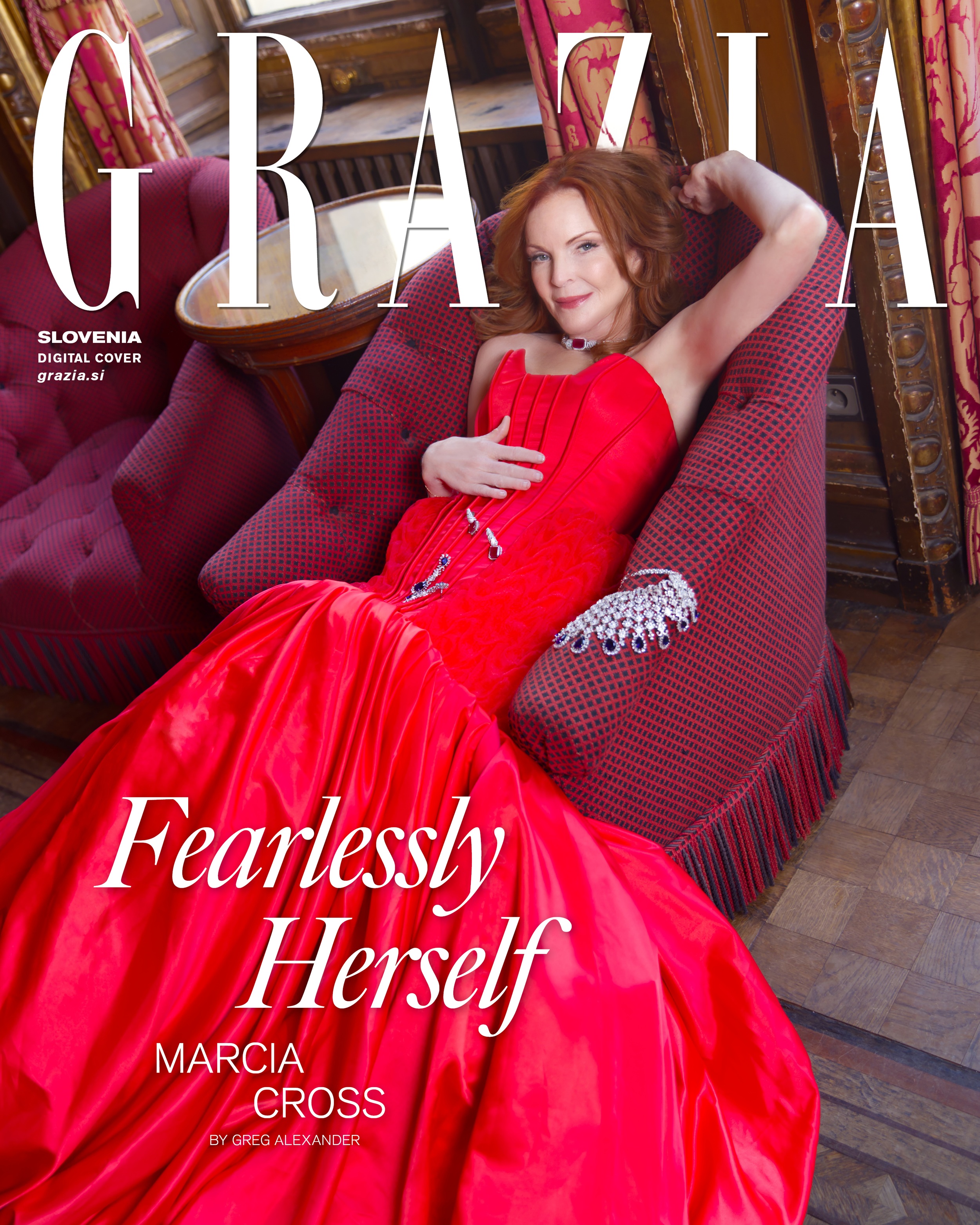
Zvezdnica: Marcia Cross @reallymarcia
Fotografija: Greg Alexander @gregalexanderofficial
Obleka: Inclover by Gaziza Shabdarbayeva @inclover_official_ @gazi_sha
Intervju: Spela Stamol @ssspela
Art direktor: Sébastien Vienne @sebastienvienne
Ličenje in pričeska: Max Roman @straight2themax
Asistentka: Emmeline Yalaz @emmeline.yl
Nakit: Rohin’s @rohinsjewellery
Produkcija: Méphistophélès Productions @mephistophelesproductions
Posebna zahvala Hôtelu de la Païva