

Moda je bila vedno odraz družbe. Način, kako se ženske oblačijo in kako jih družba vidi, pogosto kaže na njihovo vlogo, moč in položaj. Dolga desetletja je modna industrija ohranjala ozko predstavo o lepoti: da ima ta svoj rok trajanja in da nosečnost pomeni konec kariere. Danes pa smo priča spremembi – vedno več žensk ruši stare norme in dokazuje, da materinstvo ne pomeni umika iz javnosti. V tem smislu lahko govorimo o simboliki Eve, ki je pogosto predstavljena kot začetek ženskosti, zdaj pa dobiva novo, sodobno interpretacijo.
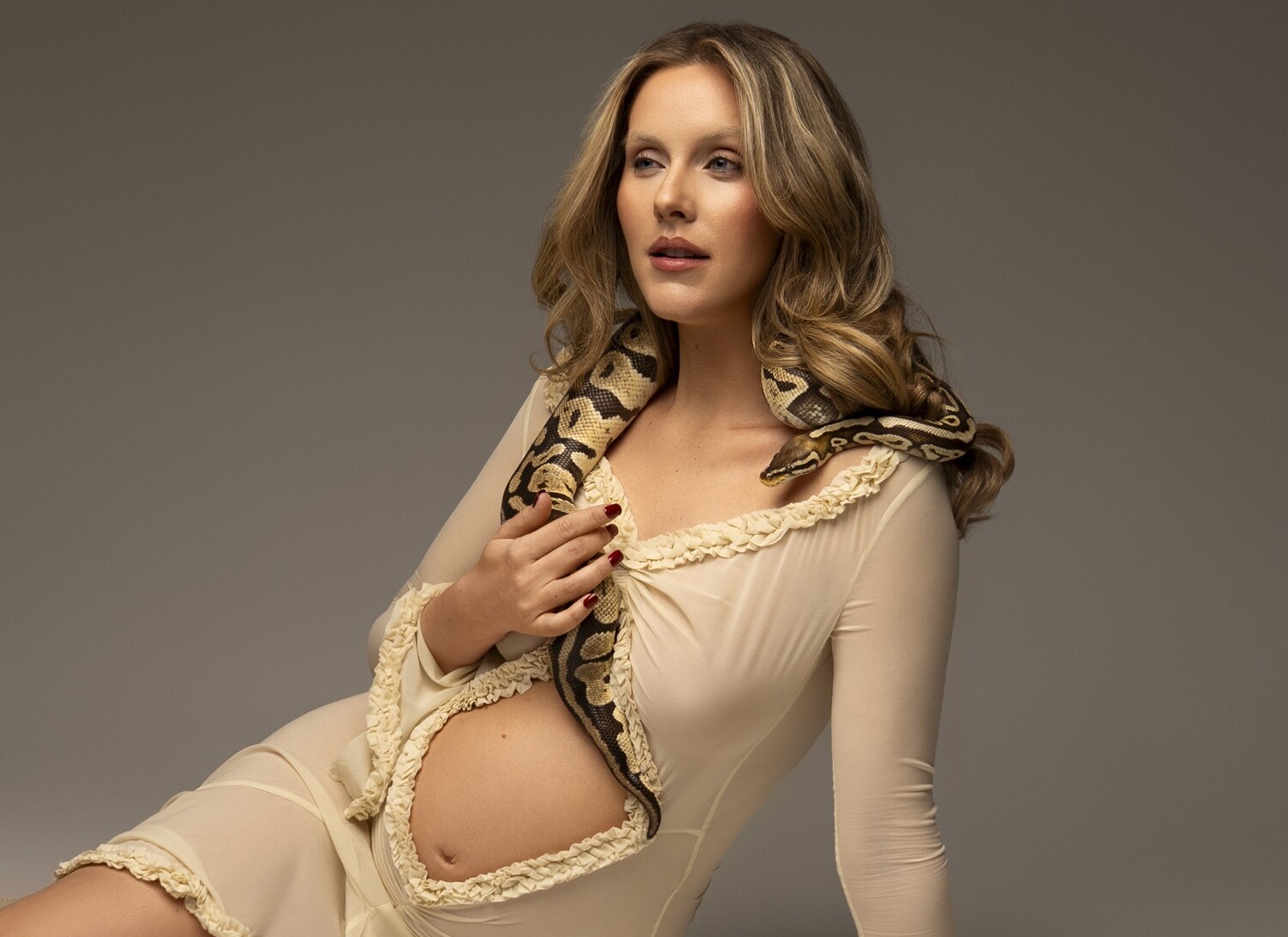
Fotografije, ki spremljajo zgodbo, so umetniška interpretacija te nove dobe. Predstavljajo Evo, ki ni več simbol skušnjave ali omejitev, temveč simbol preobrazbe. Na fotografijah nosim obleko Helma modne znamke Helsa, ki jo je ustanovila manekenka, podjetnica in mama Elsa Hosk. Čeprav obleka ni zasnovana kot nosečniška, njen svilnat material in kroj omogočata, da se v njej lepo počuti ženska v različnih življenjskih obdobjih. Kača piton ob romantičnem videzu simbolizira pot nosečnosti – rast, opuščanje starih pričakovanj in rojstvo nečesa novega.
V preteklosti sta nosečnost in materinstvo v modni industriji pogosto ostajala v ozadju. Manekenke so nosečnost skrivale iz strahu, da bi izgubile delo, saj je veljalo prepričanje, da njihovo telo ne ustreza več idealom industrije. Mnoge so se zato začasno umaknile z modnih brvi in snemanj, kot da materinstvo ne bi sodilo v zgodbo, ki jo je moda želela prodajati.
V zadnjih letih pa se to spreminja. Pomemben trenutek je bil, ko je Jasmine Tookes odprla revijo Victoria’s Secret 2025 med nosečnostjo. Nekaj let prej je Elsa Hosk, nekdanji angel Victoria’s Secret in mama, ustanovila svojo znamko Helsa ter v oblikovanje vnesla osebno razumevanje ženskosti. Obleka Helma je del te evolucije: romantična, skulpturalna in ustvarjena z zavedanjem, da ženskost ni statična.
Tudi sama sem nedavno postala del te razprave. Pred kratkim sem razkrila, da sem med tekmovanjem za Miss Universe na Tajskem skrivala svojo nosečnost. Odločitev ni bila lahka, vendar sem želela, da bi me ocenjevali enakovredno z drugimi tekmovalkami glede na moje delo, pripravljenost in nastop, ne glede na predpostavke o nosečnosti. Ženske, ki postanejo matere, so še vedno pogosto soočene s predsodki, zlasti na delovnem mestu, kjer se pojavljajo dvomi o njihovi predanosti in možnostih napredovanja. Tega nisem želela doživeti na tekmovanju. Nisem želela, da bi nosečnost postala filter, skozi katerega bi ljudje ocenjevali vse, kar počnem.
Uvrstitev med najboljših 30 je bila zato zame simbolična zmaga. Pokazala je, da materinstvo ne zmanjšuje ambicij ali sanj. Od supermodelov, ki ponosno razkrivajo nosečnost, do nosečnic na modnih revijah Victoria’s Secret in zdaj tudi uvrstitve noseče tekmovalke med najboljših 30 na Miss Universe živimo v času, ko ženske spreminjajo pravila in na novo pišejo svojo zgodbo.
Sporočilo fotografiranja je zato jasno. Obleka Helma ne skriva telesa, temveč slavi ženskost v njenem razvoju. Piton simbolizira preobrazbo, celotna podoba pa predstavlja trenutek, ko se ideja lepote širi onkraj tradicionalnih pričakovanj. To je Evolucija Eve.
Naslov je navdihnila zgodba o Adamu in Evi enem najstarejših simbolov ženskosti in skušnjave. Stoletja je bila Eva predstavljena kot šibka ali kriva. Ta interpretacija pa ponuja drugačno perspektivo: v novi dobi kača ne predstavlja skušnjave, temveč rast in preobrazbo. Evolucija Eve ni vrnitev k izvorni zgodbi, temveč njeno ponovno pisanje. Pokaže, da lahko ženska danes hkrati ustvarja, tekmuje in je mati ter da materinstvo ne zmanjšuje lepote, ampak ji daje še globlji pomen.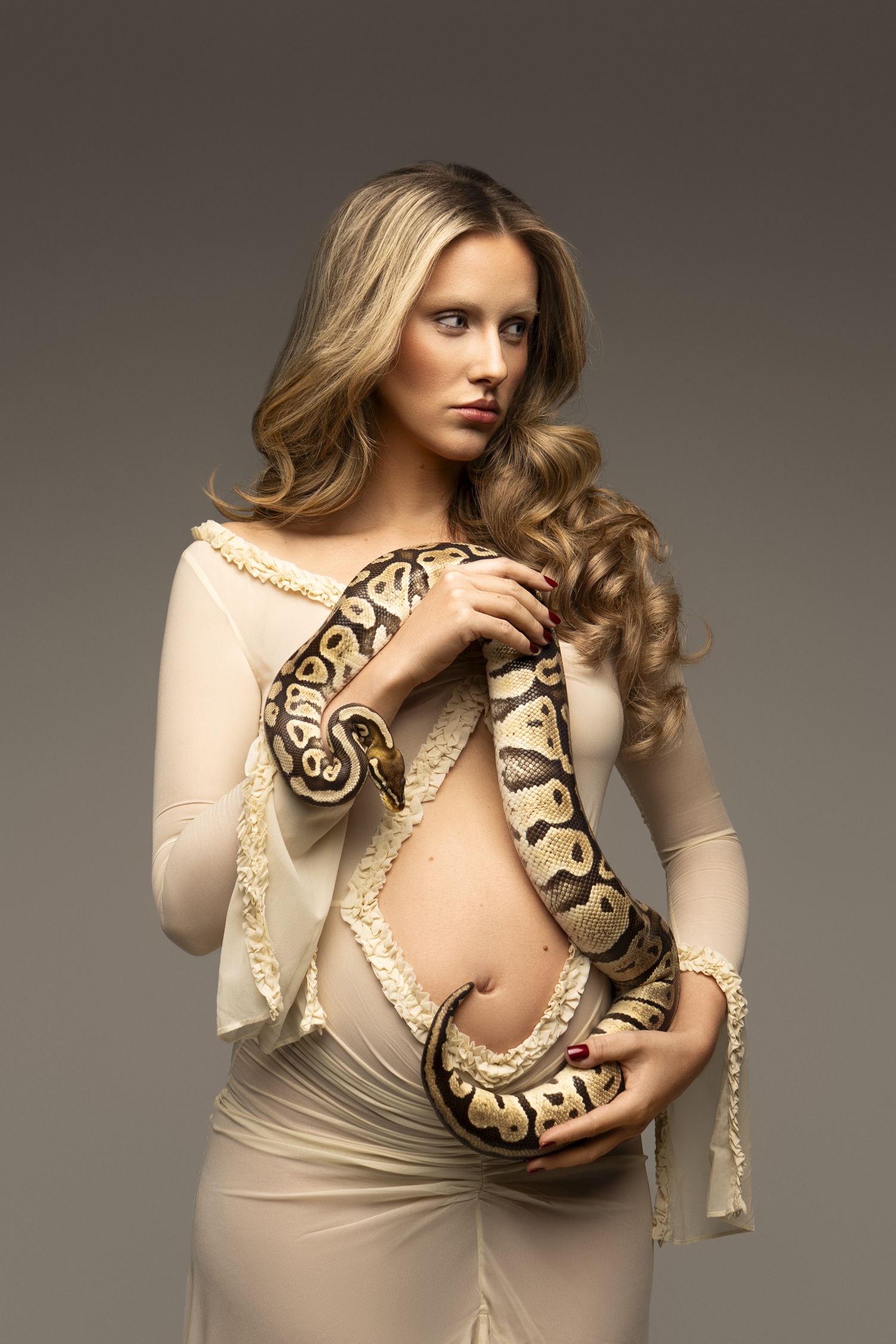
___________________________________________________________________________________________________________________________________
The Evolution of Eve: Motherhood, Fashion and a New Era of Beauty
Fashion has always evolved alongside culture. What we wear and how we wear it often mirrors the way society has viewed women, their roles, and their power. For decades, the industry upheld a narrow narrative: that beauty had an expiration date, and that pregnancy was career-ending. Today, we are witnessing a reawakening: what used to be the status quo is being smashed away by powerful women who refuse to step away from the spotlight. In many ways, it echoes the enduring symbolism of Eve, often portrayed as the beginning of womanhood itself.
The images accompanying this story represent an artistic representation of the new era. Depicting the story of Eve rewritten no longer as a figure of temptation and limitation, but rather as an opportunity for transformation. Wearing the Helma gown by Helsa, a label founded by model, entrepreneur, and mother, Elsa Hosk, I wanted to explore the adaptation of her styles. Despite not being designed for maternity wear, the silk and use of cutouts make way for a woman in several stages of her life to feel truly beautiful. To pair this romantic style with a python was to emphasize the journey of pregnancy from growth, the shedding of old expectations and the emergence of something new.
For much of fashion history, pregnancy and motherhood existed in the shadows; models wouldn’t want clients, agents or bookers to know about their pregnancy out of the fear they may lose work due to stigmas of how their body or look had changed and that they would no longer be seen as in their “prime”. Models would step away from placements, casting, and runways to preserve their image as if motherhood interrupted the story the fashion industry was trying to sell.
Last year, we saw a powerful moment when Jasmine Tookes opened the 2025 Victoria’s Secret Fashion Show while pregnant, redefining what strength and beauty can look like in one of fashion’s most recognizable stages. Only a few years earlier, Elsa Hosk, also a Victoria’s Secret angel and mother, launched her brand, Helsa, bringing a personal understanding of womanhood to her designs. Her Helma gown feels like a part of that evolution: romantic, sculptural and designed with an awareness that femininity is not static.
Most recently, pregnancy and motherhood are back in the headlines of fashion, but this time because of me. A few days ago, I shared that I had hidden my pregnancy during the Miss Universe competition in Thailand. It wasn’t a decision taken lightly, and choosing to hide the pregnancy wasn’t done out of fear of sharing a personal part of myself: it was about wanting to be seen equally among the other contestants. I wanted my preparation, my work ethic, and my presence on stage to be judged without assumptions about what pregnancy might mean for my capabilities.
Too often, mothers are placed into categories that suggest limitations, most notably in society through the workplace, and fewer opportunities for advancement, as employers ponder her fertility and how that can affect her commitment to her job, thus resulting in a gender-based pay gap. However, that is a far greater subject than my story. I didn’t want the judges to consider me as less valuable, less focused, or less able to compete in demanding spaces. I didn’t want pregnancy or motherhood to become a filter through which everything I did was interpreted.
Advancing into the top 30 felt like a reward for quietly challenging the idea that motherhood somehow diminishes a woman’s ambition or dream and a door opened for future women blessed with pregnancy during a time they are chasing their dreams. Though some have suggested I should not have hidden my pregnancy since the rules of Miss Universe have changed, the stigma and prejudice people hold against pregnant women has not been eradicated. From supermodels embracing pregnancy, to pregnant women opening the Victoria’s Secret Fashion Show, to now placing in the top 30 at Miss Universe 4 months pregnant, we are in the era of women creating social change and reclaiming the fashion industry in ways the men who created much of it could have never imagined.
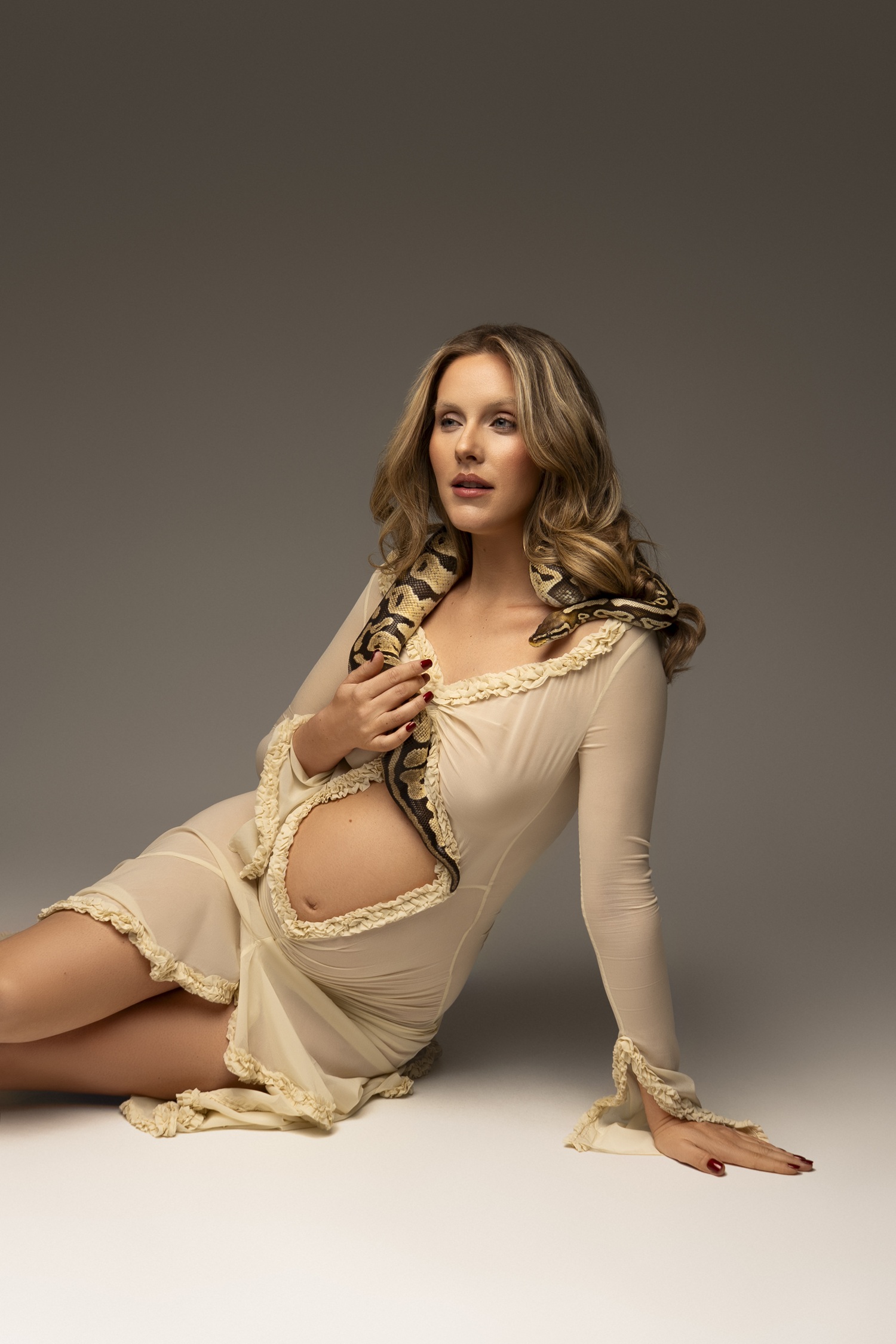 In this photo shoot, the message becomes visual. The Helma gown does not conceal the body; it celebrates femininity in its evolution. The python becomes a metaphor for transformation, and the overall composition reflects a moment where beauty is expanding beyond traditional expectations. It is The Evolution of Eve.
I titled these images The Evolution of Eve as a reference to the story of Adam and Eve, one of the oldest cultural symbols of womanhood, temptation, and the serpent in an attempt to pay tribute to how even the first woman could have had a powerful new narrative given a different era. For centuries, Eve had been interpreted through a lens of blame, fragility and cautionary tales of being the lesser gender. This interpretation is drastically different; it’s Eve in the new era, where the snake is not temptation but transformation and growth. The Evolution of Eveis not about returning to an origin story; it’s about rewriting it. It demonstrates the power women have today to create change, rewrite their story and control their own narrative. A woman can be a creator, a competitor, and a mother all at once. And perhaps the most powerful transformation of all is that motherhood no longer removes a woman from beauty stories; it deepens it.
Model: Jaime VandenBerg @missjaimeyvonne
Fotografije: Alina Grassain @grassain.photography
Ličenje: Svitlana Bilyavska @bilana_beauty
Pričeska: Sam Dassouki @samdassouki
Asistentka kreativnega vodstva: Amber Gilbertson @ambergilbertson
Promocija: Multi Publications @multi_publications