

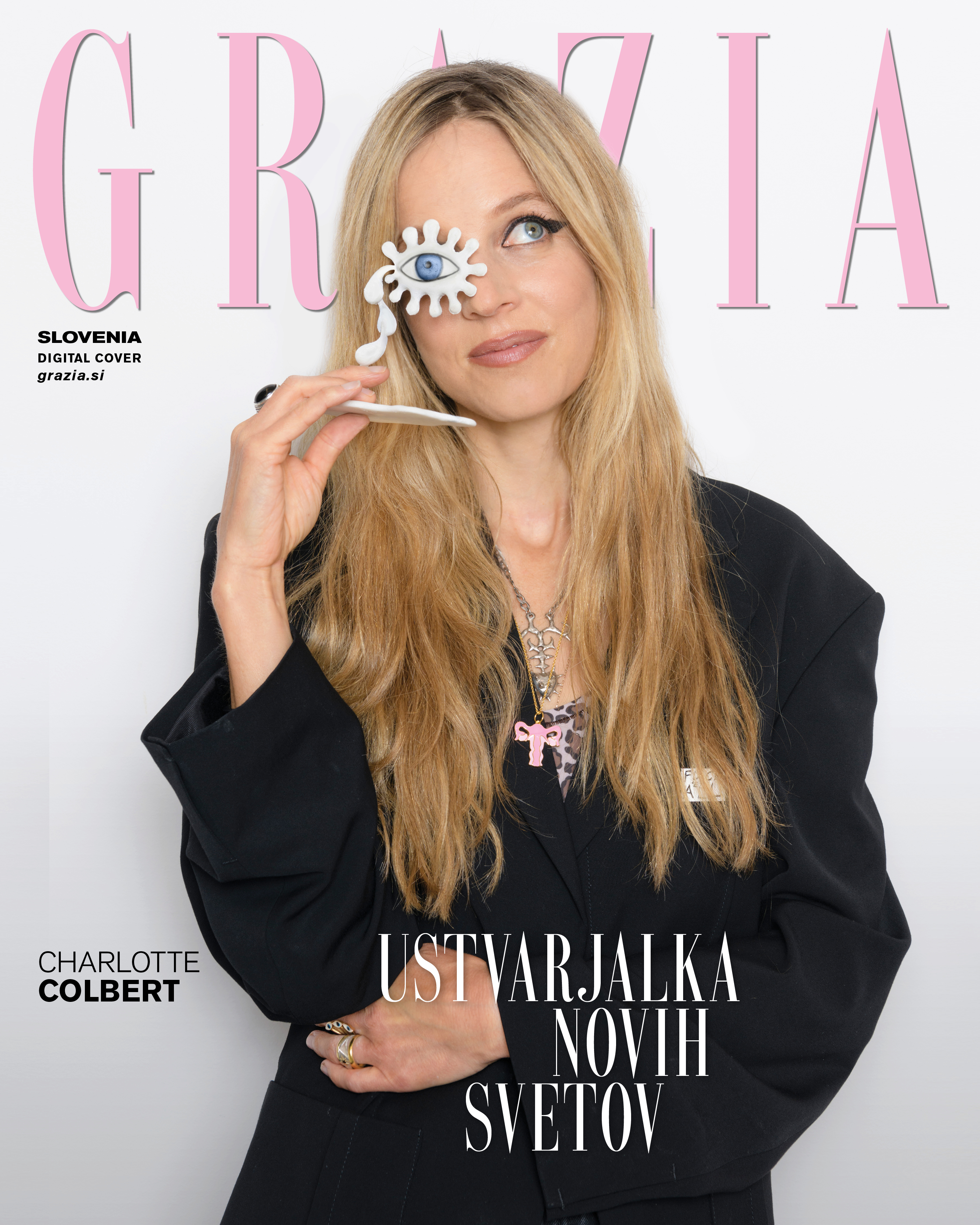
Charlotte Colbert v Benetkah prepleta polirano jeklo, starodavne simbole in osebne spomine v svet, ki nas spodbuja, da pogledamo onkraj obstoječega in razmislimo o tem, kaj bi še lahko bilo mogoče.
Nekje obstaja svetloba: vrtovi hotela Aman Venice (Fotografija: Marta Buso)
Zamišljanje tega, kar prihaja
Benetke tem idejam ponujajo nenavadno poetičen dom. Tudi same so mesto, ustvarjeno z izjemnim dejanjem domišljije in vztrajnosti, zgrajeno na vodi ter nenehno preoblikovano z odsevi, gibanjem in časom.
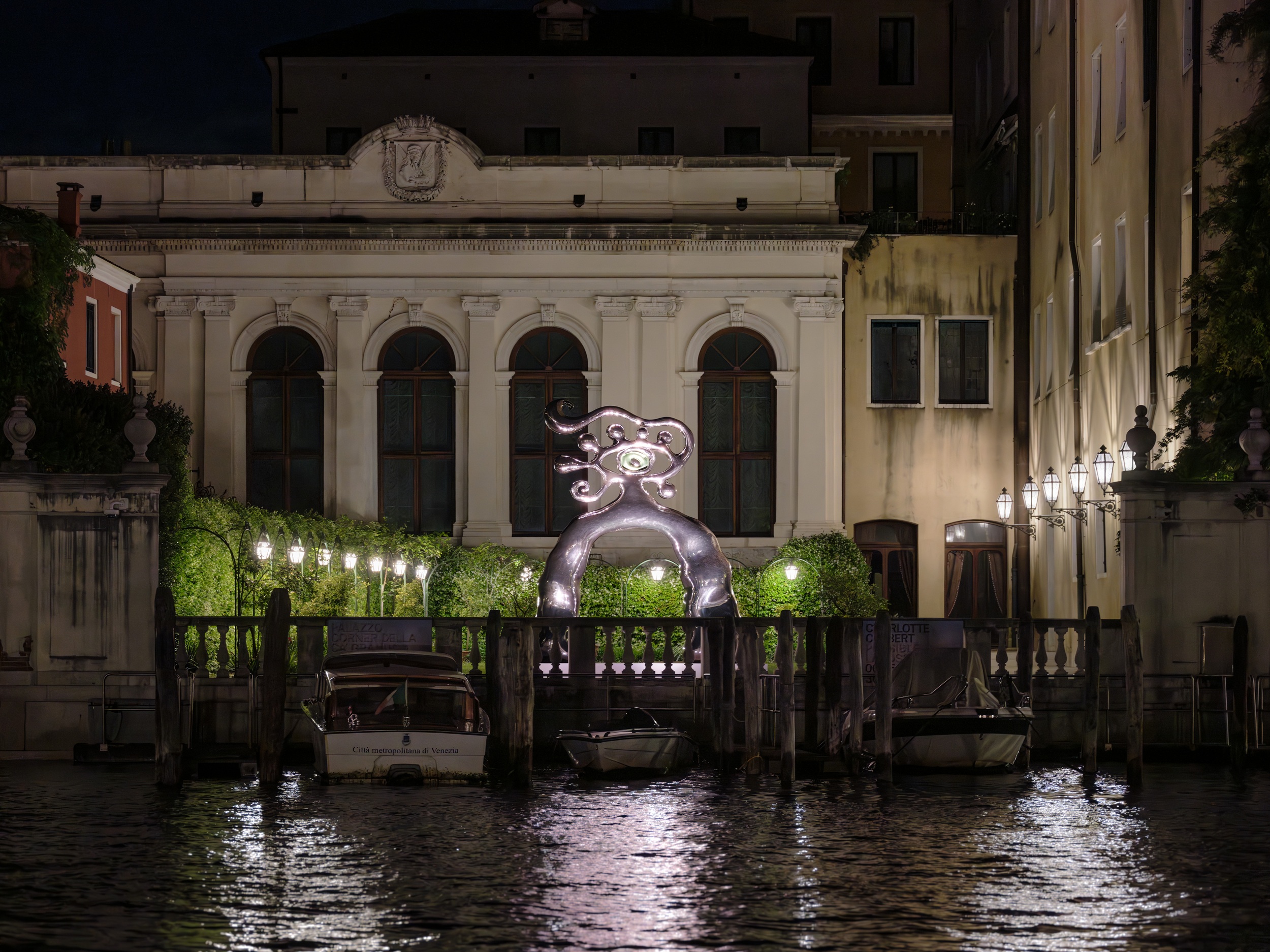
Na tem ozadju nam Colbert predstavi oko, zazrto navzven, lok, ki vodi v neznano, drevo s simboli vere, vodnjak želja, poln hrepenenja, in svetilko, ki namiguje, da nekje še vedno obstaja svetloba.
Noben od teh predmetov ne ponuja dokončnega odgovora in morda je prav v tem njihova moč. Colbert gledalcem pušča dovolj prostora, da v delo vnesejo lastne spomine, prepričanja in domišljijo.
Razstava Possible Landscapes tako ni toliko pobeg iz resničnosti kot povabilo, da jo premislimo na novo.
Morda pokrajine prihodnosti še ne obstajajo nekje, kjer čakajo, da jih odkrijemo. Morda si jih moramo najprej zamisliti.
Fotografija: Ugo Carmeni
Fotografija: Ugo Carmeni
_________________________________________________________________________________
Beyond the Visible: Inside Charlotte Colbert’s Possible Landscapes
In Venice, Charlotte Colbert turns polished steel, ancient symbols and personal memory into a world that asks us to look beyond what is already there and consider what might still be possible. There is something especially fitting about encountering Charlotte Colbert’s work in Venice. It is a city that already seems to exist somewhere between reality and imagination. Palaces rise from the water, centuries old façades shimmer in the canals below them, and familiar views change completely as the light moves across the city. Venice has always encouraged those who pass through it to look a little more closely. For Colbert, a multimedia artist and award winning filmmaker whose work moves between sculpture, installation, cinema and the surreal, the city becomes more than a backdrop. It becomes part of the conversation.
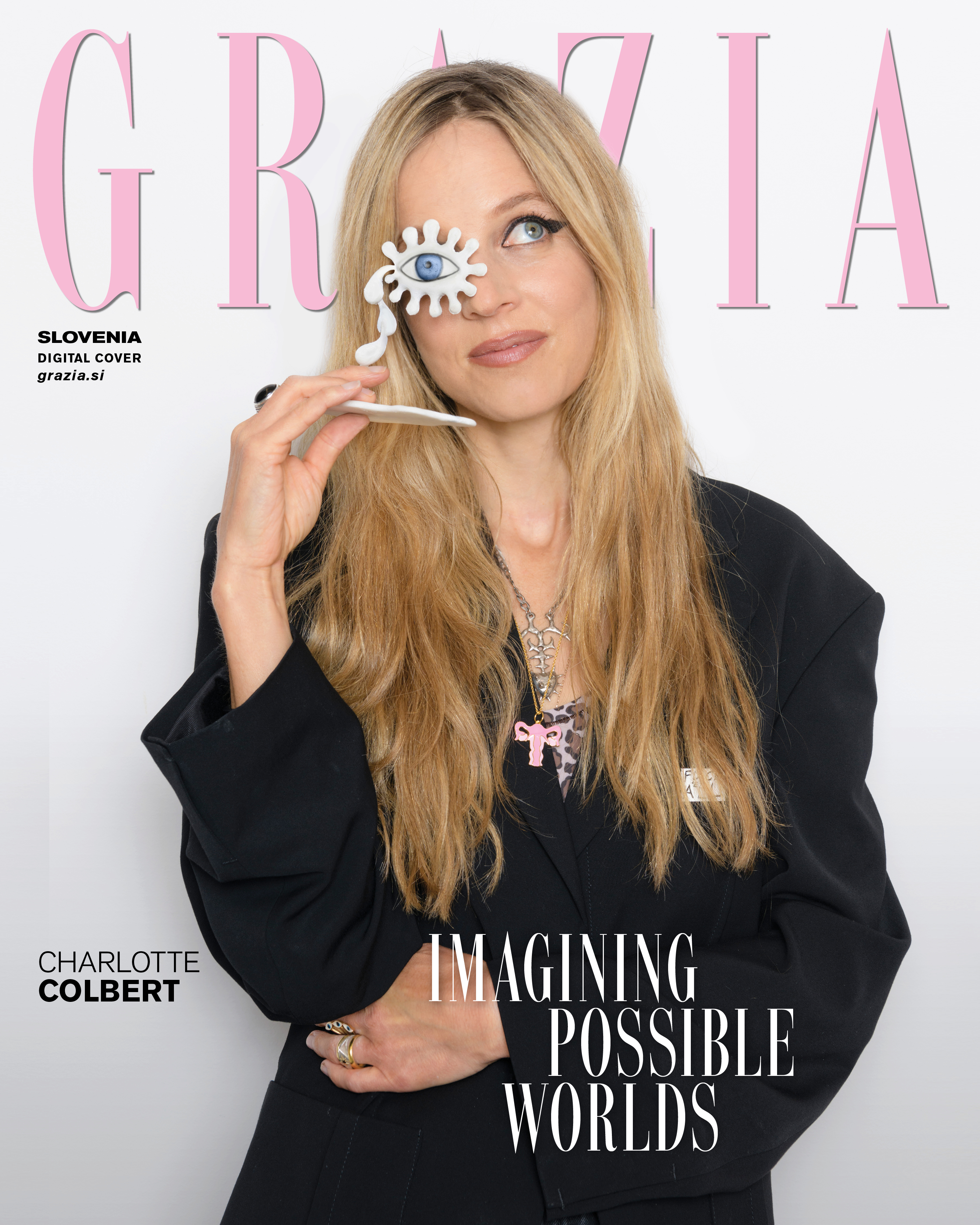
Photo: Caroline Mardon
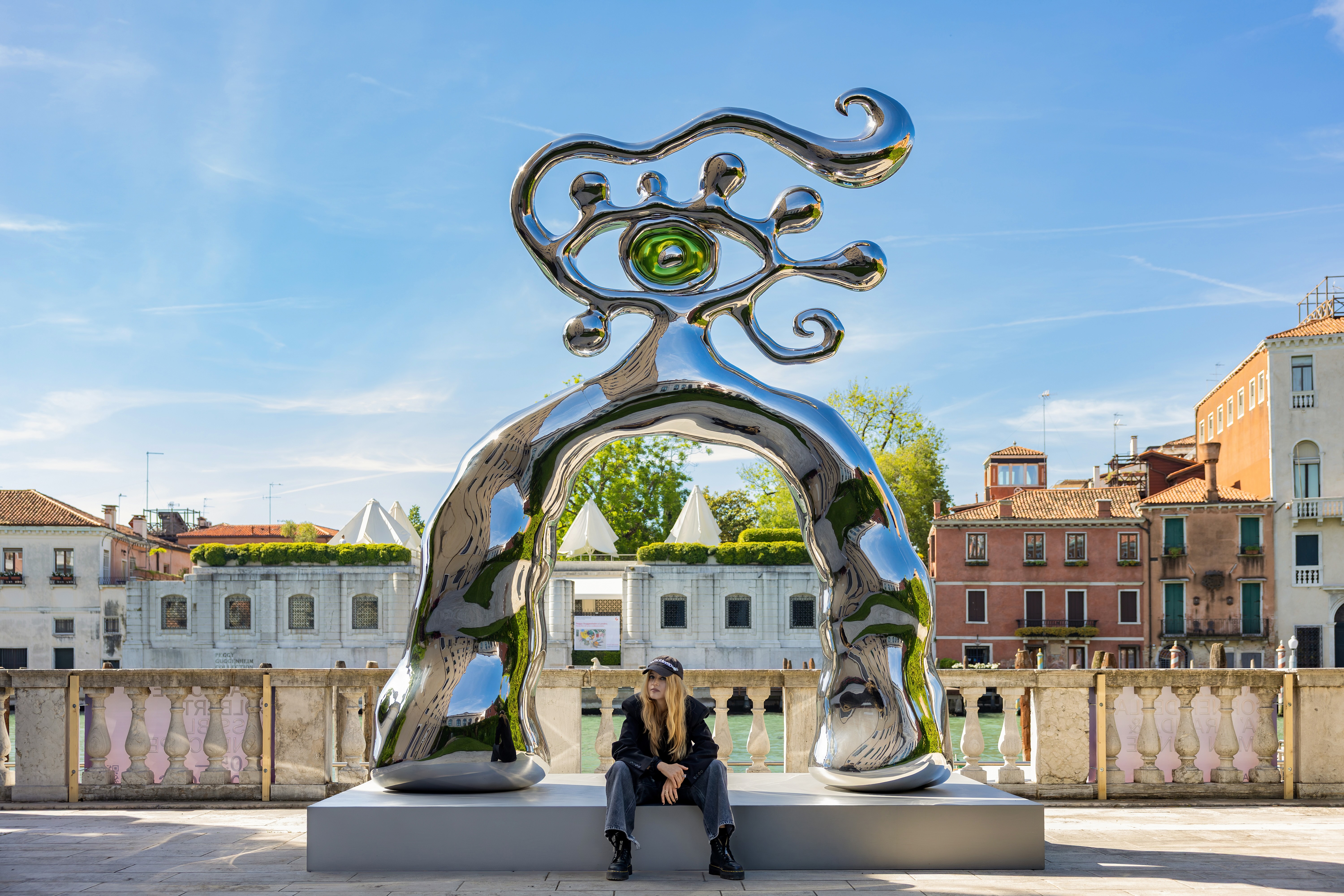
Photo: Marta Buso
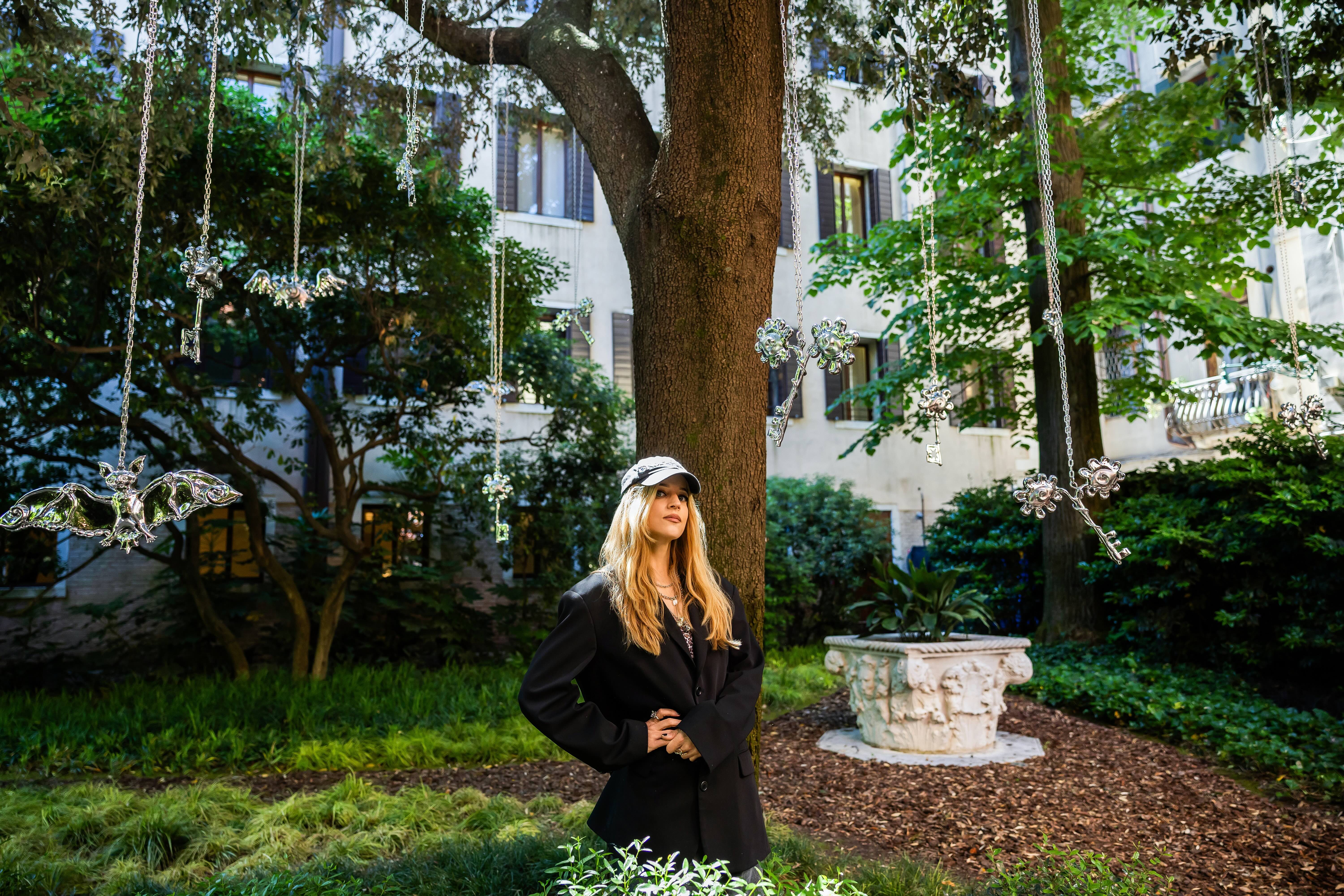
Photo: Marta Buso
Presented during La Biennale di Venezia, Possible Landscapes unfolds across two extraordinary locations, Palazzo Corner della Ca’ Granda and Aman Venice at Palazzo Papadopoli.
Curated by Yasmine Helou and organised by Chiara Bordin, the exhibition brings together a series of large scale stainless steel works created specifically for Venice.
Moving between dream and reality, nature and mythology, spirituality and personal memory, the sculptures invite us into Colbert’s distinctive world, one where familiar objects suddenly carry different meanings and imagination becomes something far more powerful than fantasy.
At the heart of the exhibition is a question that has long interested Colbert: how much of the world around us exists because somebody first imagined it?
Cities, clothes, traditions, political systems and cultural structures all began as ideas before becoming part of everyday life. For Colbert, this gives imagination a kind of responsibility. It is not simply a place to escape to. It is where possibilities begin.
As she explains, “Collective imagination is the basis of the structures we live in, and we can’t let those be taken away from us. We have to imagine our own futures, not let them be imagined for us.”
That idea quietly connects every work in Possible Landscapes.
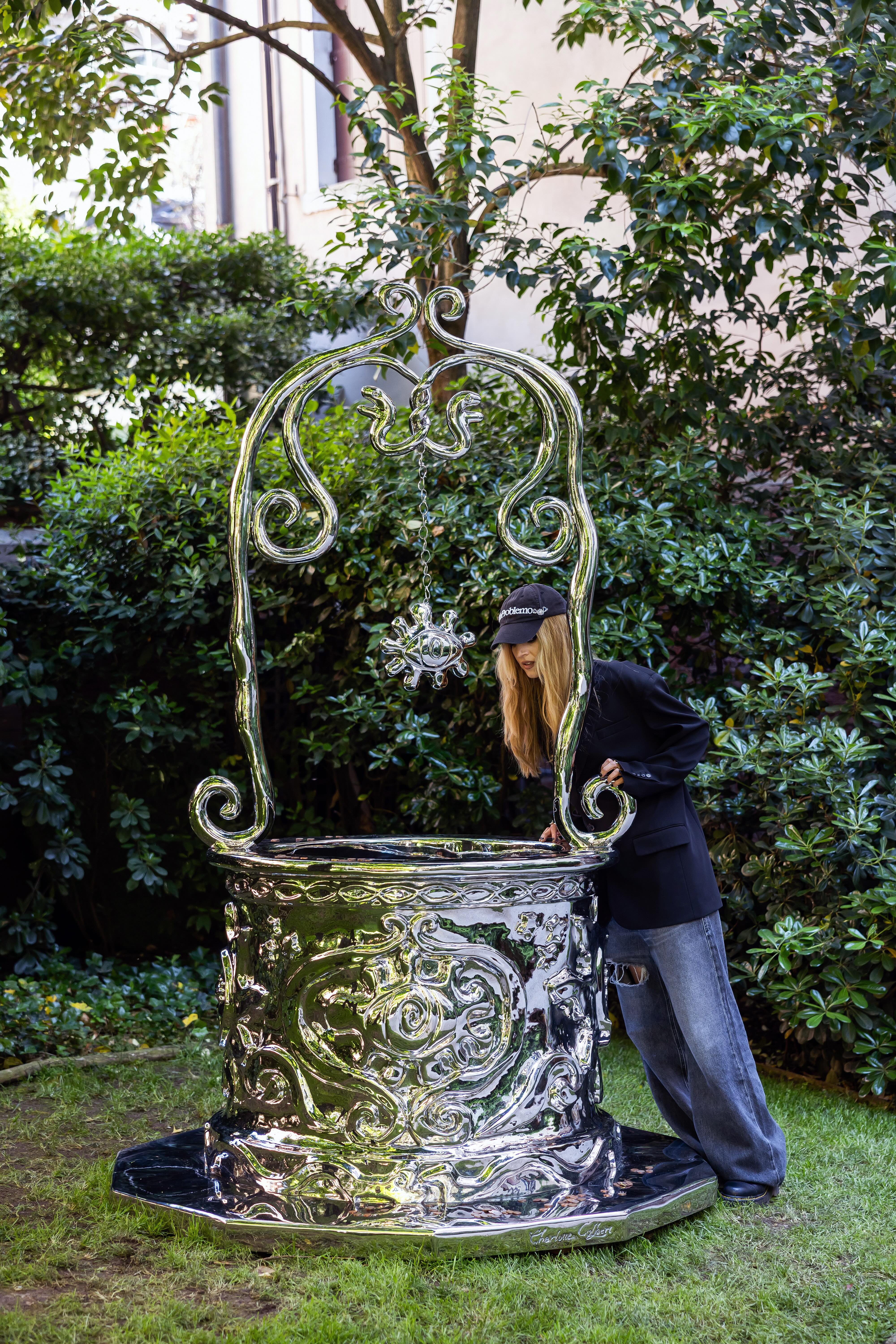
Photo: Marta Buso
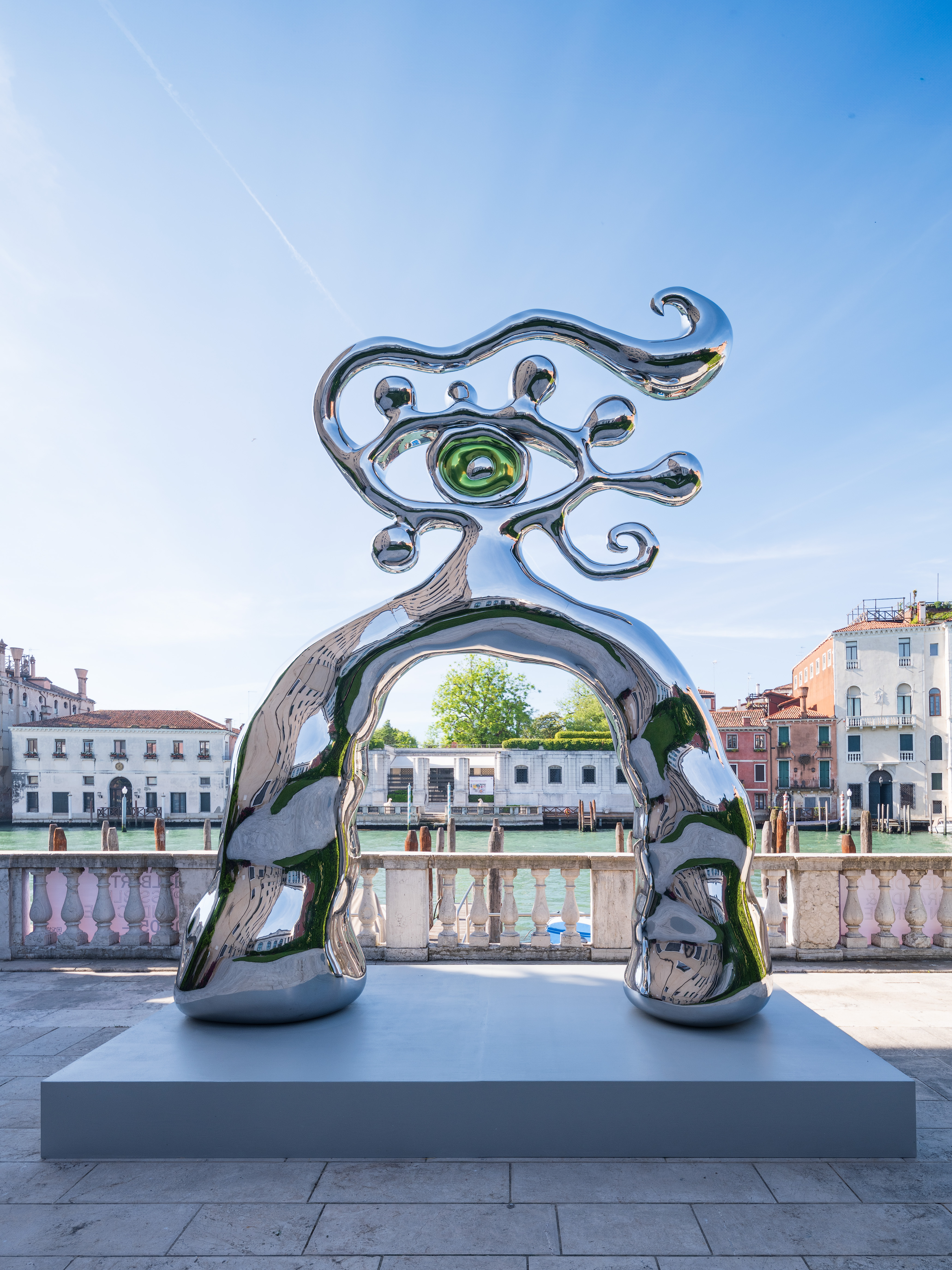
Photo: Ugo Carmeni
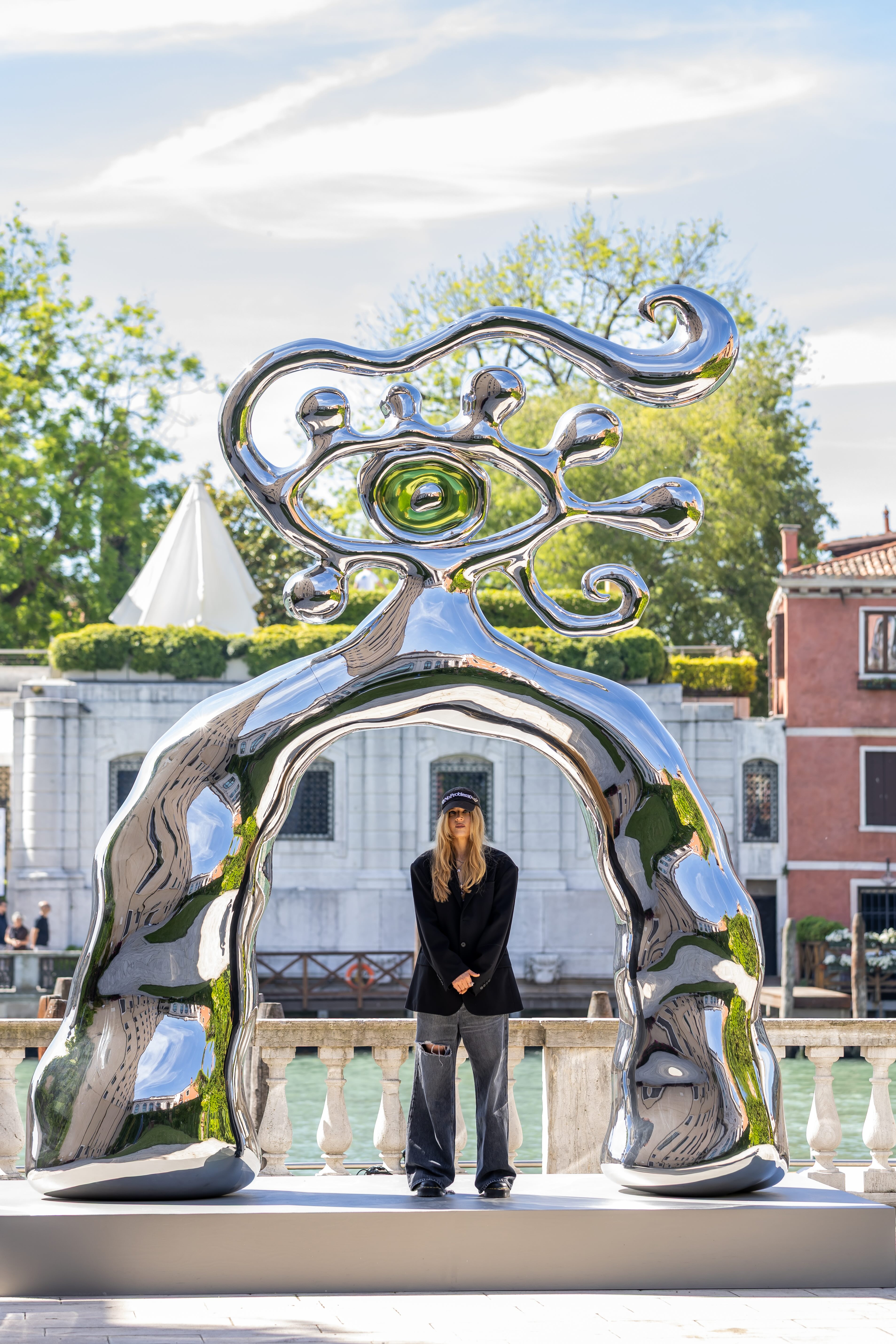
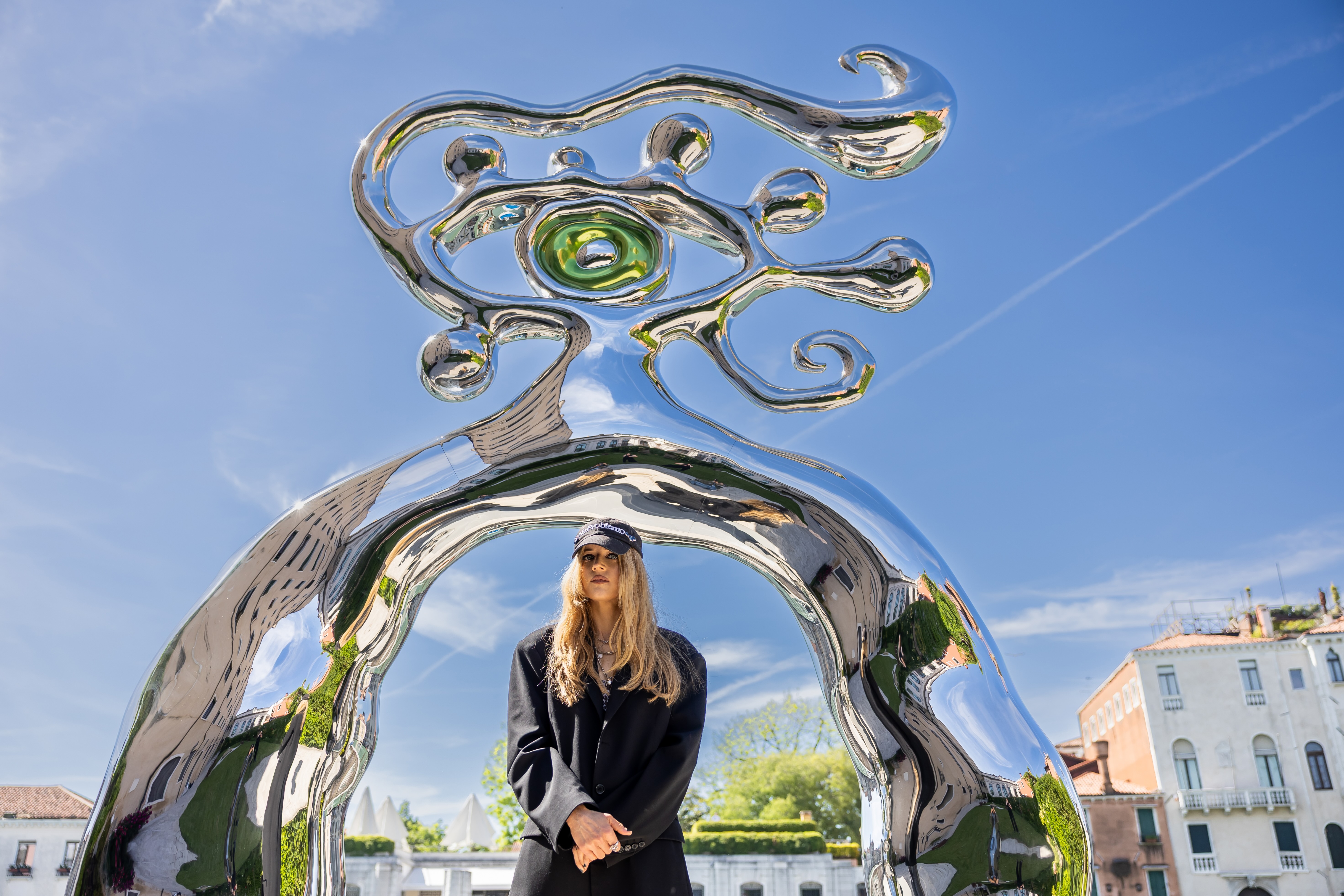
There is an almost surreal tension between the sculpture and its surroundings. Its smooth contemporary surface stands against centuries of Venetian architecture, yet because the steel is reflective, Venice itself enters the work.
Water moves across its surface as passing boats appear and disappear, the sky shifts and fragments of the surrounding palace become distorted within the metal. Nothing stays completely still, and that constant change seems central to Colbert’s vision.
What appears fixed can always be seen differently depending on where we stand. The sculpture does not tell us what exists on the other side of the arch. Instead, it leaves that space open, allowing us to imagine it for ourselves.
For the opening of the exhibition, musician Birdy created a lyrical soundscape in collaboration with Colbert, bringing another dimension to the installation and extending the experience beyond the purely visual.
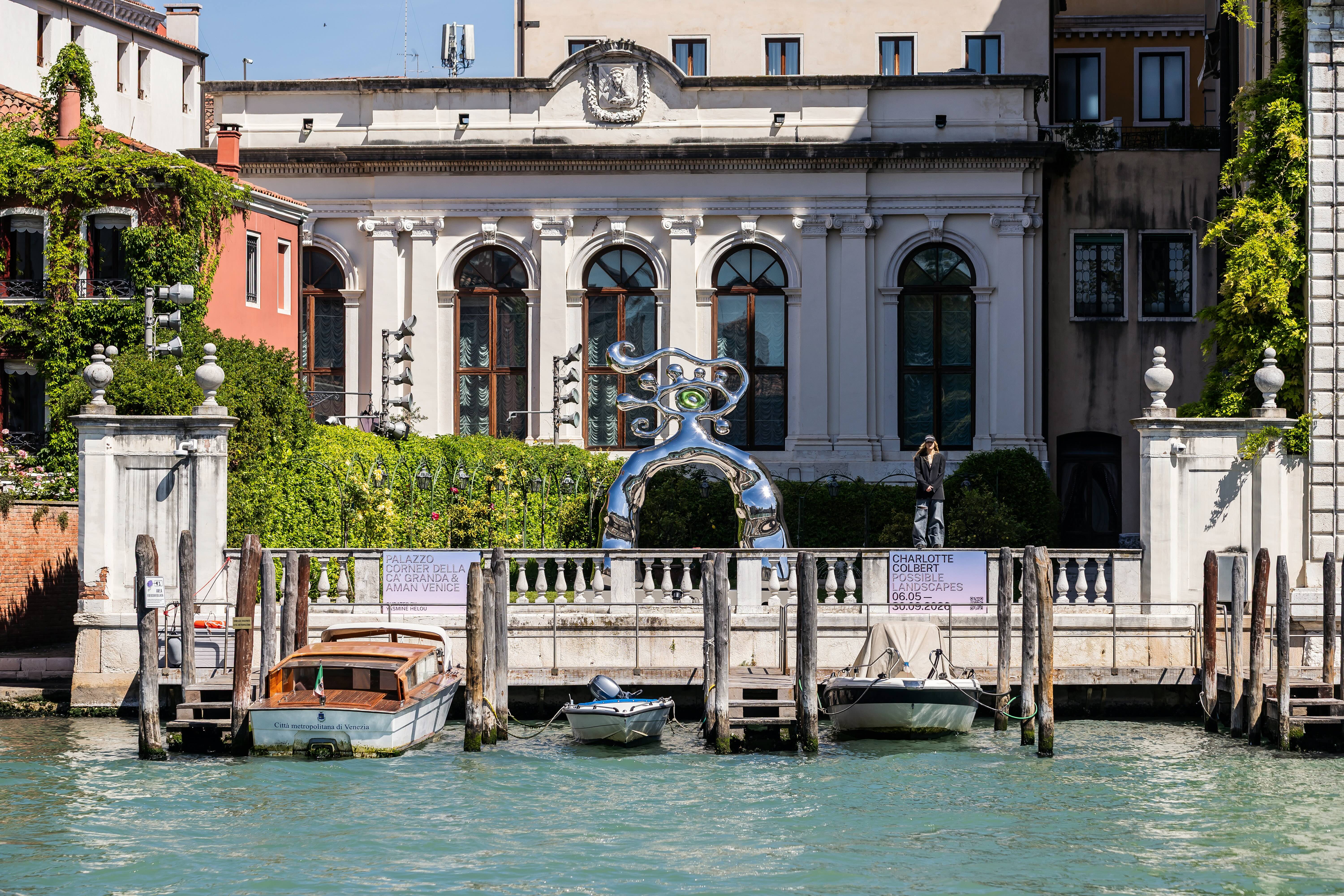
Photo: Marta Buso
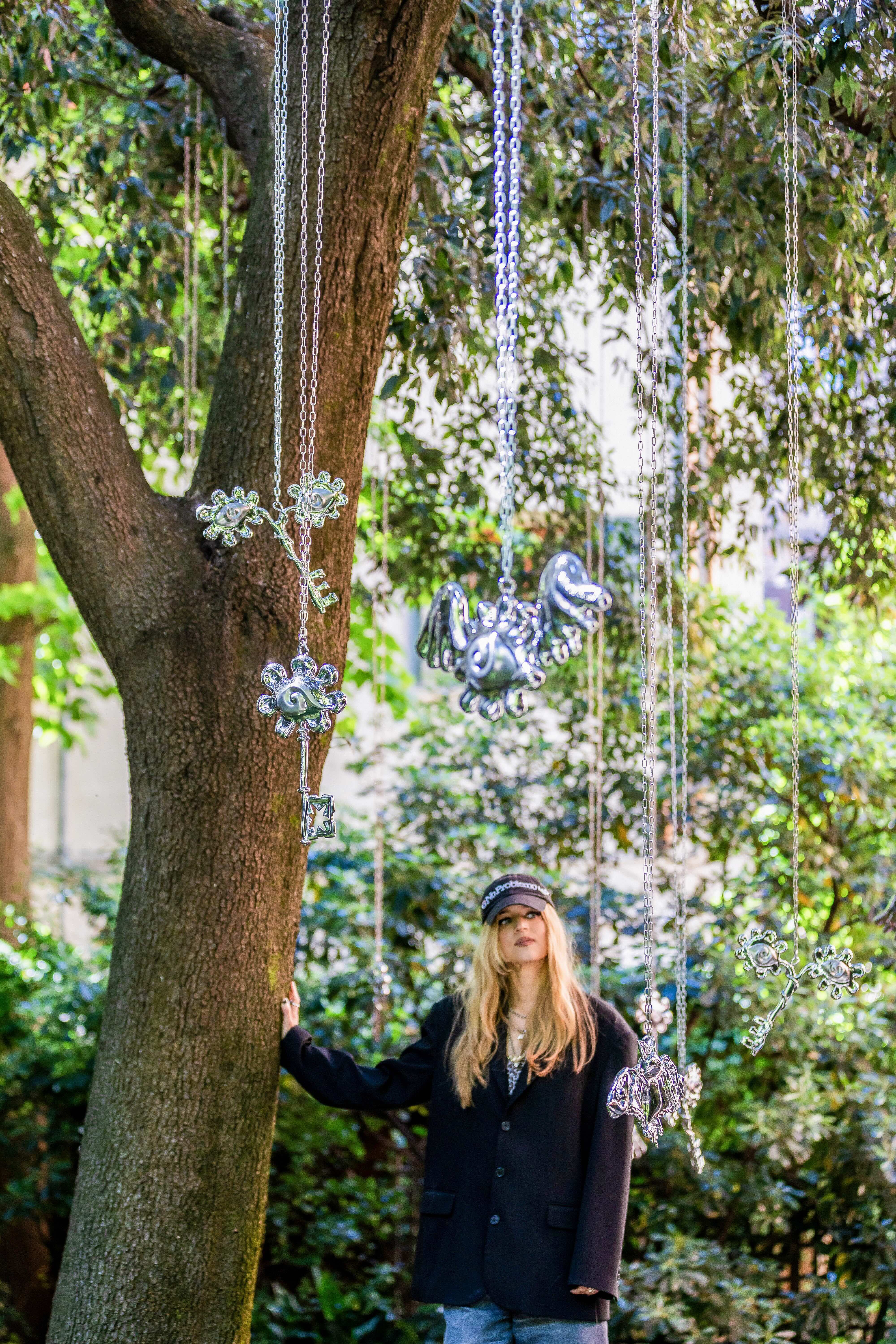
Photo: Marta Buso
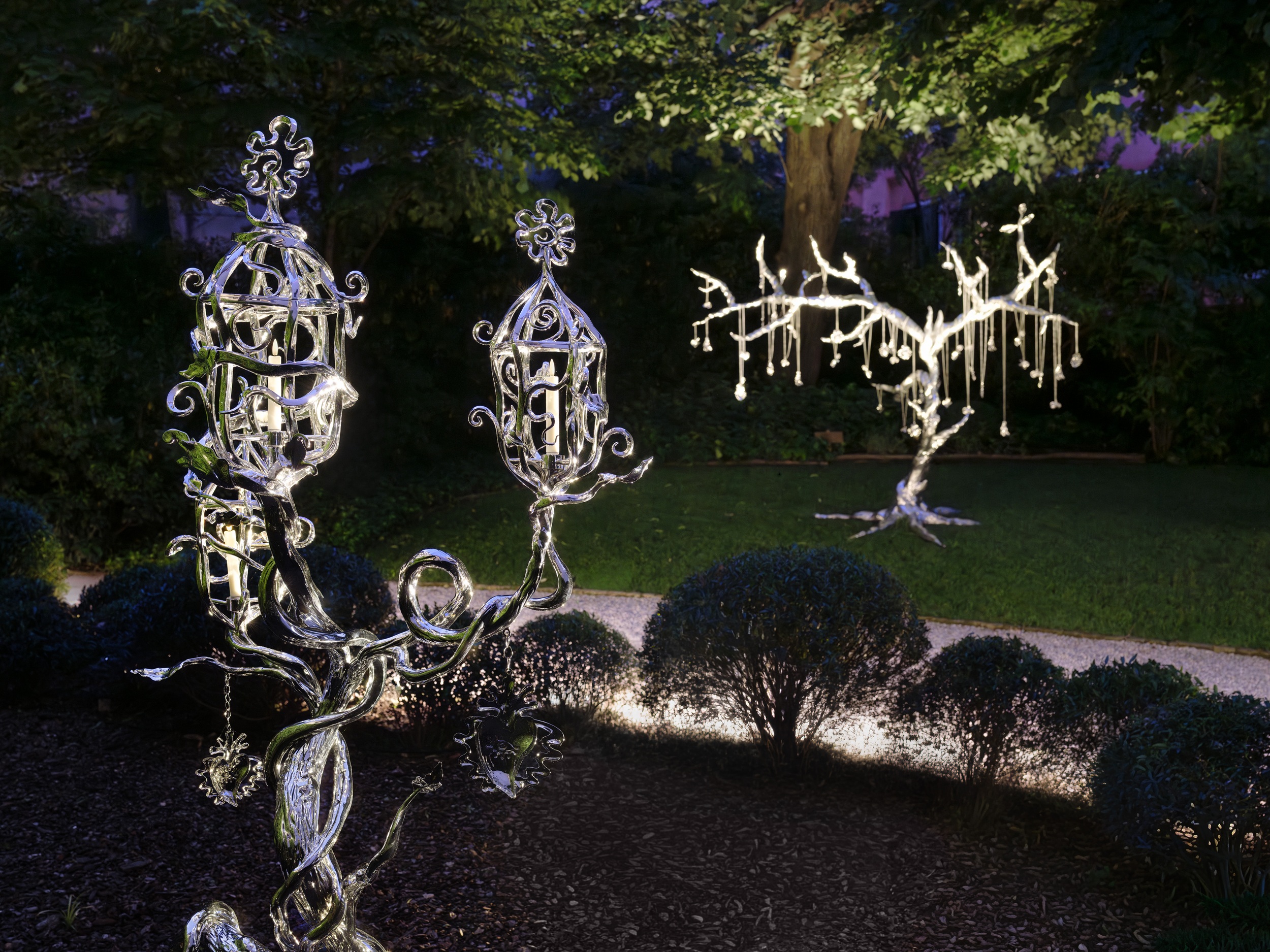
Across the Grand Canal, the exhibition moves into the secluded gardens of Aman Venice, where Colbert’s work becomes more intimate and spiritual. Among the greenery stands Where Angels Live, a polished steel tree adorned with votive forms, relics, milagros and amulets. It feels at once familiar and impossible.
Trees have long carried associations with life, roots, growth, shelter and connection. Colbert’s version retains that sense of something almost sacred, while transforming it through mirrored steel and objects associated with belief and ritual.
The work draws from Colbert’s own journeys through Mexico and along the Camino de Santiago, experiences that informed her use of votive objects, relics, milagros and amulets. Through them, Where Angels Live becomes a meditation on belief, ritual and the human impulse to place meaning in objects, while evoking what Colbert describes as the healing power of belief and the sacred mystery of nature.
Against the living trees and foliage surrounding it, Colbert’s metallic tree creates an unexpected contrast, reflecting nature through something entirely human made. Its branches do not grow leaves, but instead carry objects filled with human meaning.
Across cultures and generations, people have found ways to give physical form to things that cannot easily be seen, from hope and protection to memory and belief. Where Angels Live brings those rituals into a new landscape without attempting to define spirituality itself. Instead, the work leaves space for mystery and for the viewer’s own understanding of what belief can mean.
Supernatural Tendencies: Gardens of Aman Venice (Photo: Marta Buso)
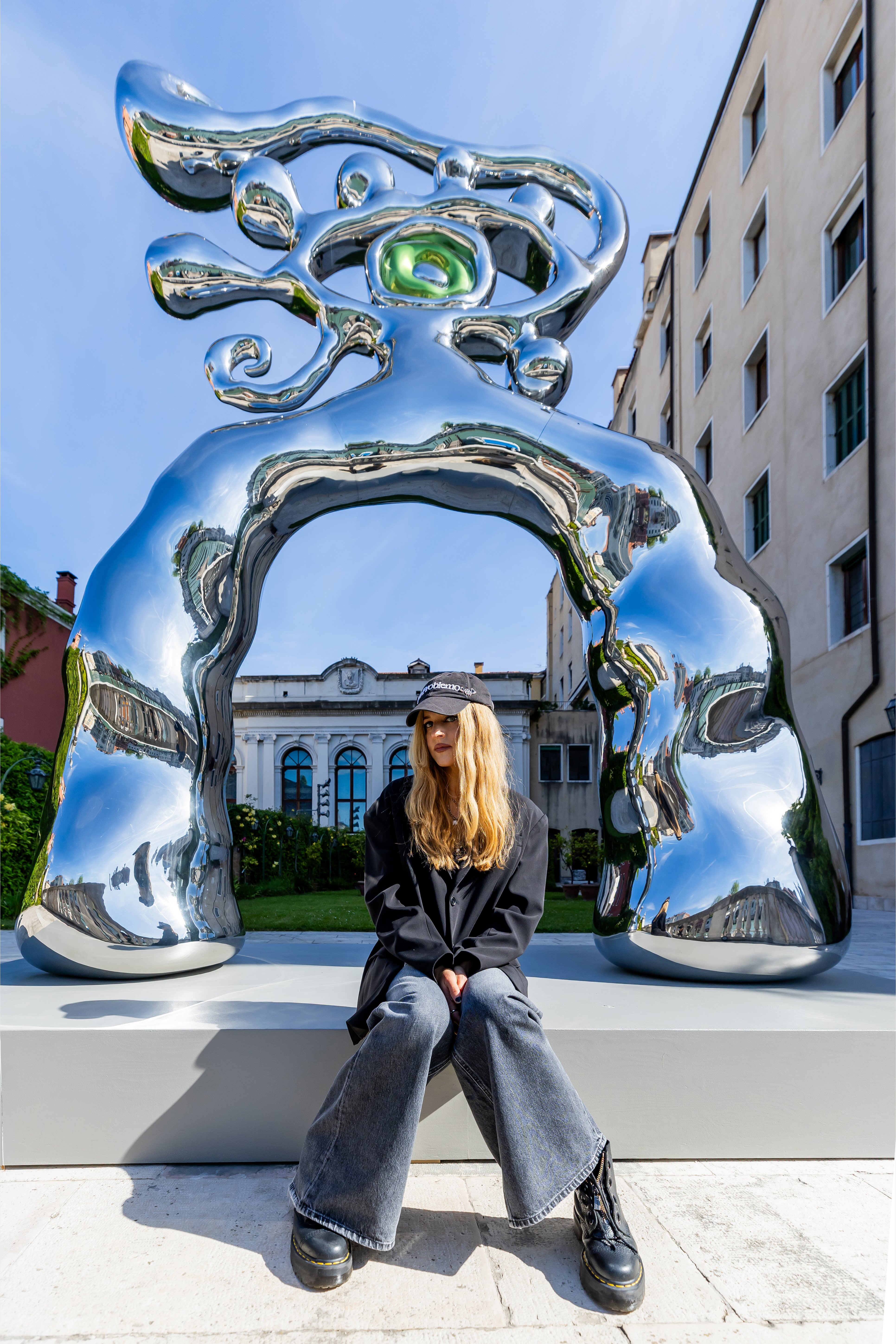
Photo: Marta Buso
Nearby, Charlotte Colbert turns to another object almost everyone recognizes from childhood stories: the wishing well. In Supernatural Tendencies, however, the fairy tale becomes something more psychological.
The ritual is familiar. We stand beside a well, think of something we truly want and make a wish. It is an extraordinarily simple act, yet beneath it lies an entire world of desire. Colbert reimagines the wishing well in reflective metal, transforming it into a place of intention, hope and projection.
Its mirrored surface adds another dimension. As we approach the object carrying a wish for the future, we also encounter our own reflection. The work therefore becomes not only about what we want, but also about the person doing the wishing.
What do our deepest desires reveal about us? What future are we imagining, and what changes when we begin to believe that another possibility might truly exist?
There is a sense of playfulness in Supernatural Tendencies, but beneath its fairy tale reference lies a deeper connection to the exhibition’s central idea. Before something can become possible, perhaps we must first allow ourselves to imagine it.
There Is Light Somewhere: Gardens of Aman Venice (Photo: Marta Buso)
One of the exhibition’s most evocative titles belongs to There Is Light Somewhere, a sculptural lantern situated within the gardens of Aman Venice.
A lantern is a simple object, but its purpose only becomes meaningful when darkness exists, and that relationship gives the sculpture its emotional resonance. Rather than presenting light as a denial of darkness or uncertainty, the work seems to allow both ideas to exist together.
There are moments when the path forward is visible and moments when it is not. Sometimes all that is needed is enough light to believe the path continues.
Within Possible Landscapes, the lantern becomes a symbol of possibility, suggesting that something can exist even before we are able to see it clearly. There is an understated sense of hope in that idea.
We may not always know where a path will lead, but the possibility of light gives us a reason to continue looking.
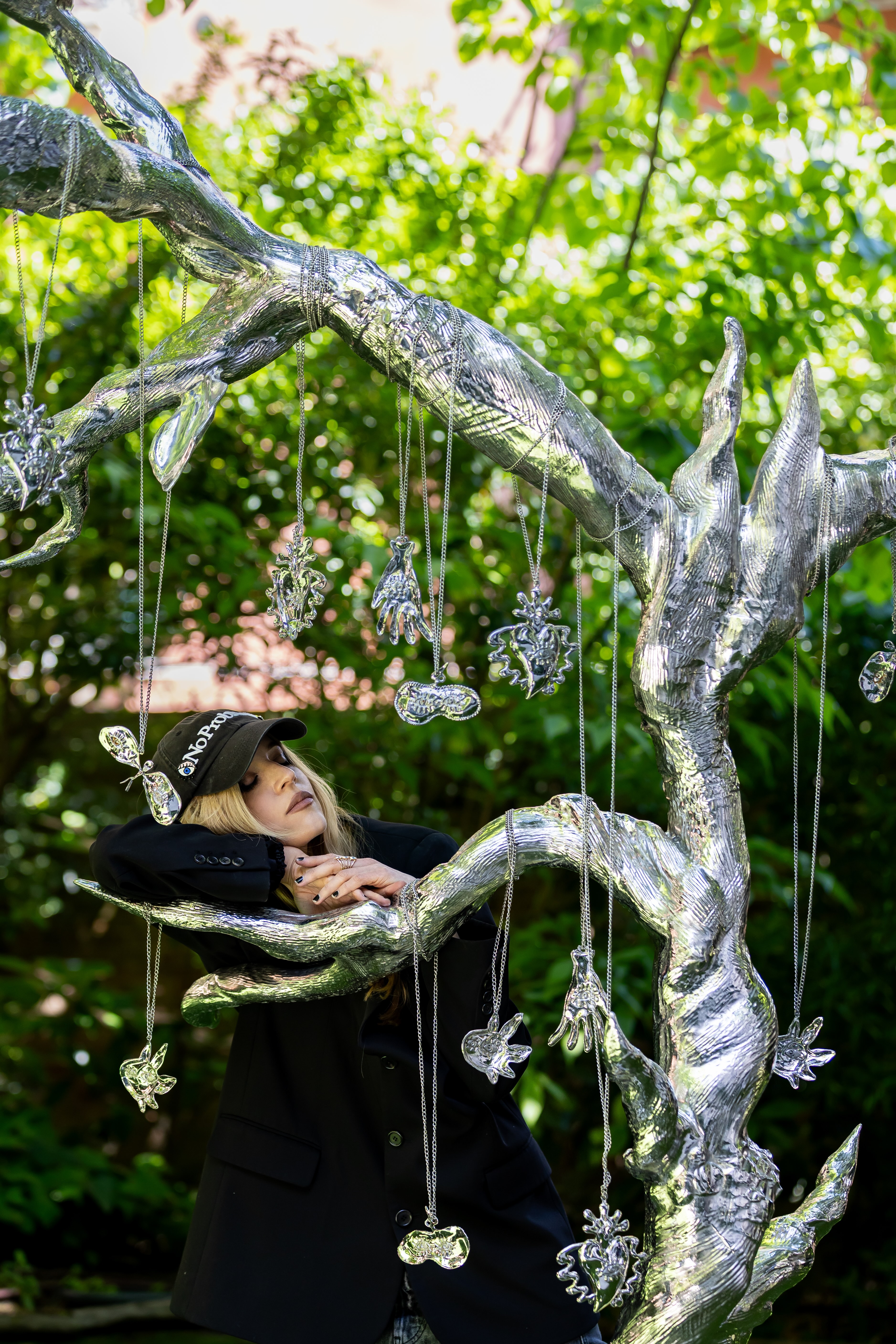
Strings of Serendipity: Gardens of Aman Venice (Photo: Marta Buso)
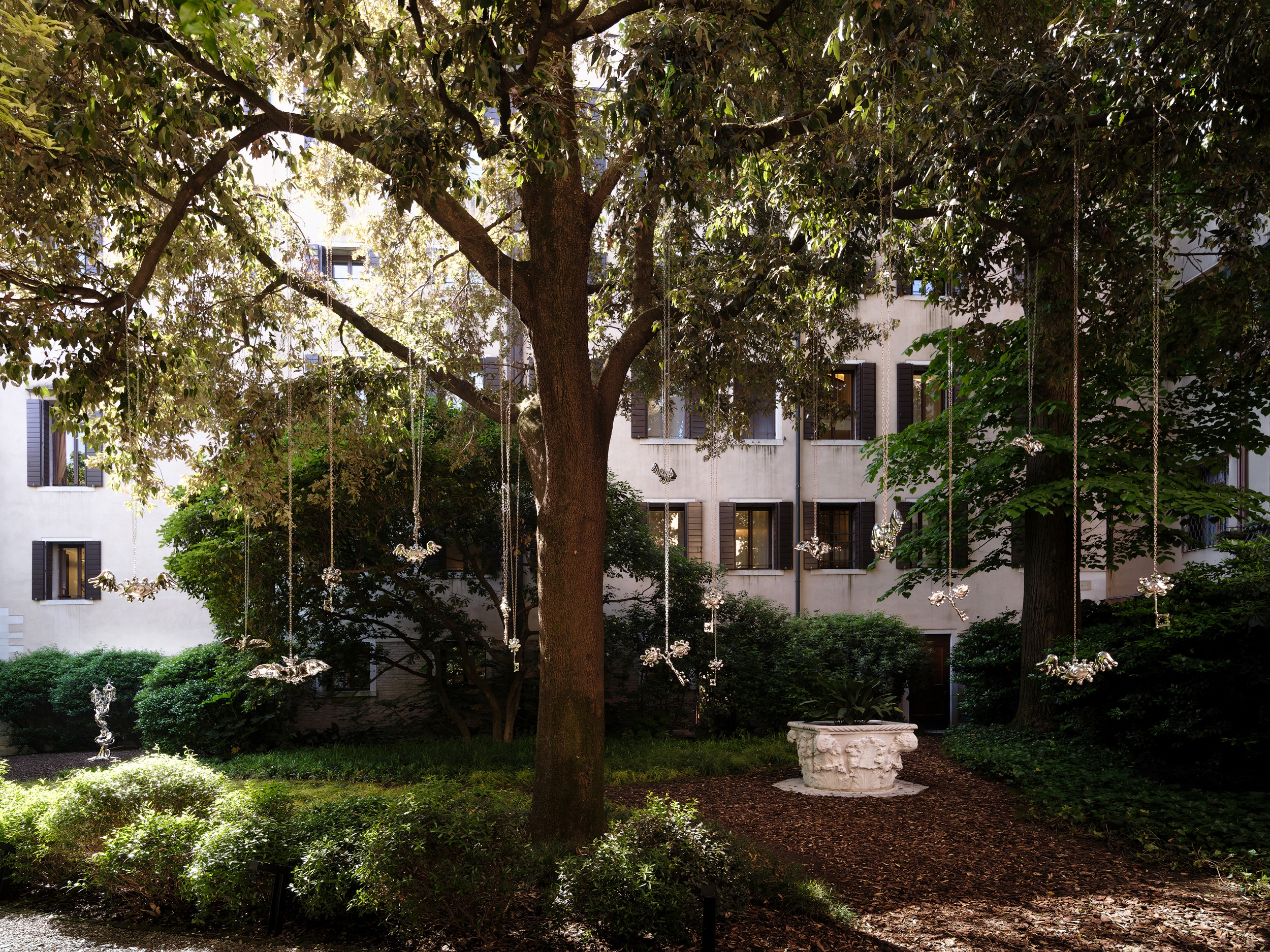
The experience extends further into the gardens through Strings of Serendipity, a series of suspended pendants dispersed throughout the landscape.
Rather than appearing as one monumental object, these smaller elements reveal themselves gradually as visitors move through the space. One piece may catch the light between the branches, while another appears unexpectedly from a different viewpoint.
Their placement introduces the idea of chance into the exhibition. Serendipity describes those unexpected encounters or discoveries that become meaningful despite never having been planned.
They are the moments capable of altering a conversation, a relationship, a journey or even the direction of a life.
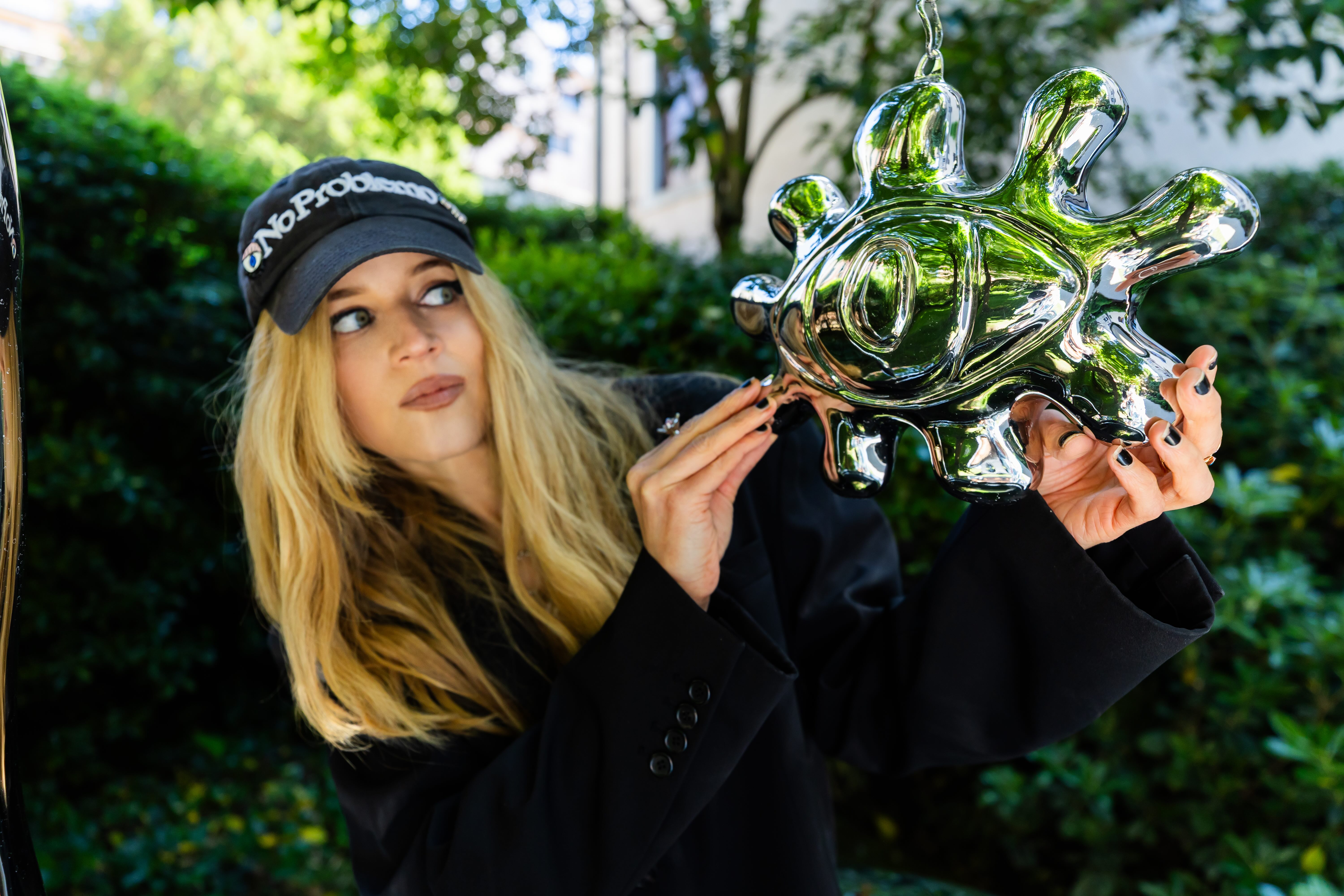
Photo: Marta Buso
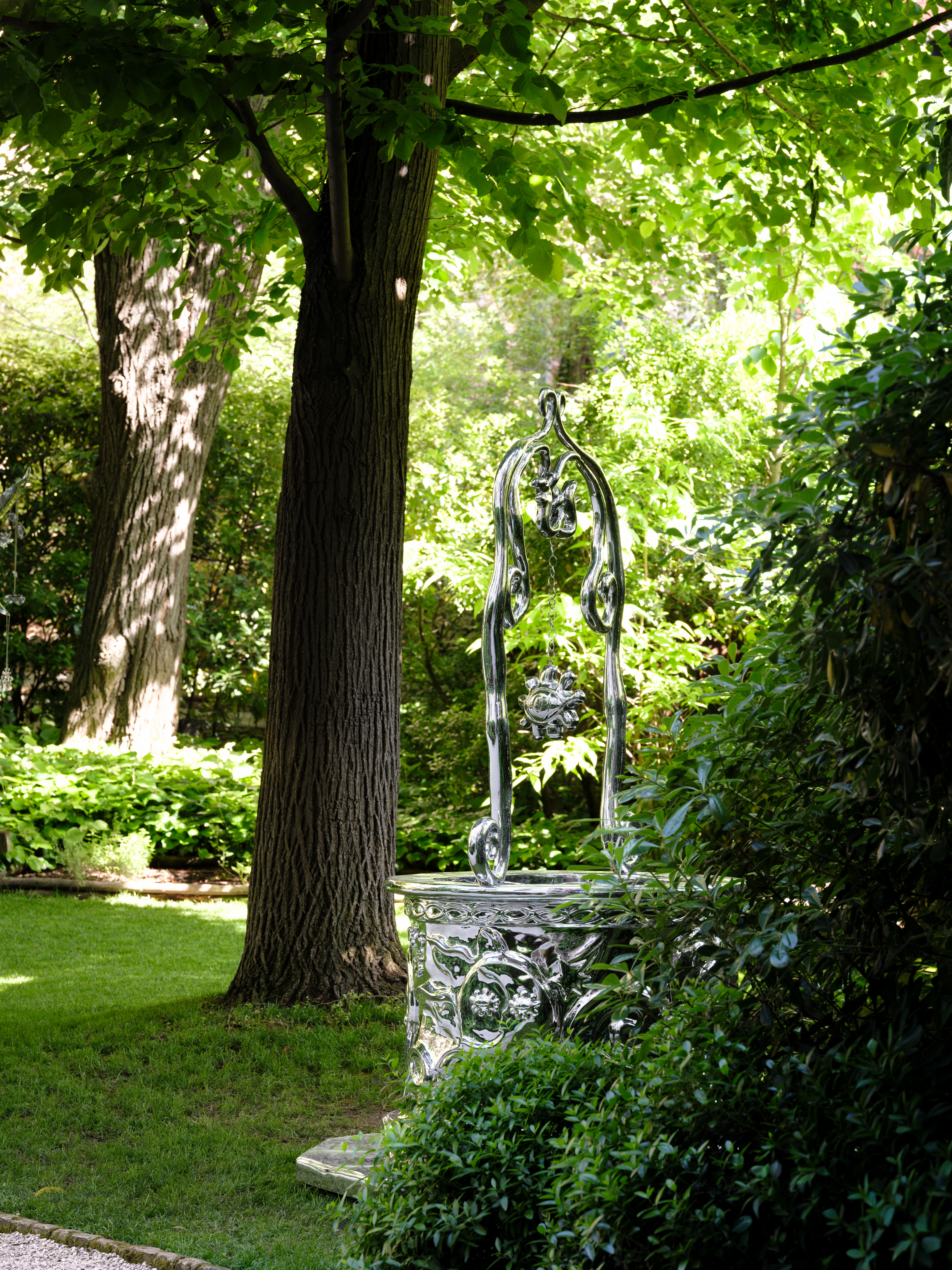
Photo: Ugo Carmeni
Her creative language also extends into film. Her debut feature, She Will, received international acclaim and won the Golden Leopard for Best First Feature.
Colbert is now in post production on her second feature, Becoming Capa, written and directed by her and starring Esther McGregor, Mark Eydelshteyn, Danny Huston and Clémence Poésy.
The film tells the story of legendary war photographers Gerda Taro and Robert Capa, bringing Colbert once again to questions surrounding storytelling, memory and the power of images to influence the way we understand reality.
Whether through cinema or sculpture, images are never simply decorative in Colbert’s world. They carry ideas, create narratives and sometimes allow us to imagine something that did not seem possible before.
Imagining What Comes Next
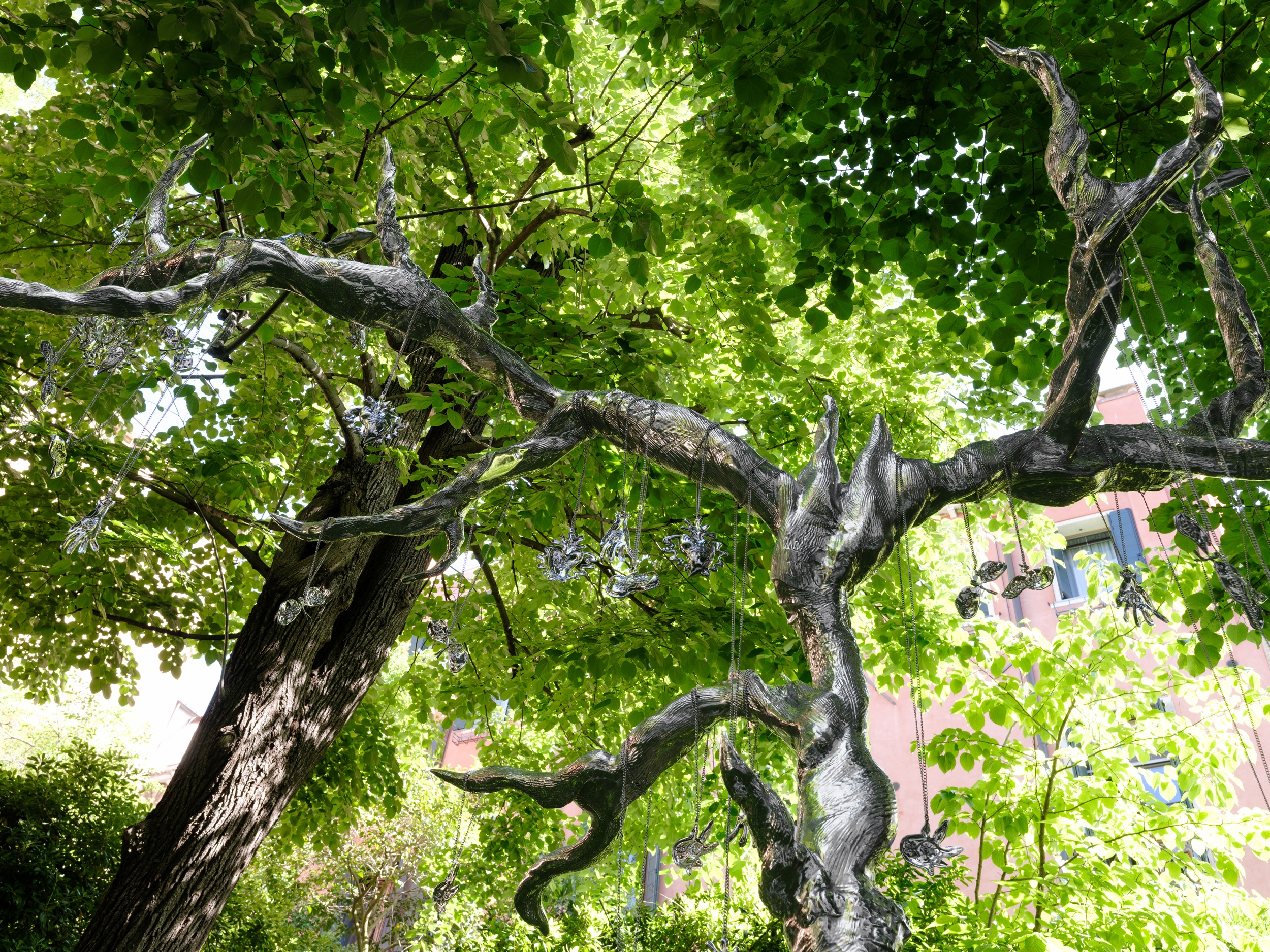
Photo: Ugo Carmeni
Venice provides an unusually poetic home for these ideas. It is itself a city created through an extraordinary act of imagination and endurance, built on water and continually transformed by reflection, movement and time.
Against that backdrop, Colbert gives us an eye looking outward, an arch leading somewhere unknown, a tree carrying symbols of belief, a wishing well holding desire and a lantern suggesting that somewhere there is still light.
None of these objects provides a definitive answer, and that may be precisely their power. Colbert leaves enough space for viewers to bring their own memories, beliefs and imagination into the work.
Possible Landscapes ultimately feels less like an exhibition about escaping reality than an invitation to reconsider it.
Perhaps the landscapes of the future do not already exist somewhere, waiting for us to discover them. Perhaps we have to imagine them first.
Photo: Ugo Carmeni
Photo: Ugo Carmeni